

We have always had a surge protector on our RV. In November, our surge protector died while protecting our RV. After going to San Diego, we went back to the desert for some relaxing time. We had cut short our intended route across the Southwestern States because we needed to get back to San Diego and repair our car. Our lap around the Southwest was the first time we made a trip without towing our car.
Making a trip without our towed car was a new adventure for us. The only way this was comfortable was because of the support of our friends, who became our transportation outside the RV. Our trip to the Grand Canyon and the Albuquerque Balloon Fiesta was planned (and paid for) in January 2025. I didn’t want to miss the trip. We had a great time. Here are the links to the stories. RVing to the Grand Canyon and Camping under the balloons at the Albuquerque Balloon Fiesta
The plan was timed to be after our four-month trip to Europe and before the Christmas season. The general idea was to make a three-month loop around the Southwest ending in the California desert. Instead of making the trip last nearly four months, we went back to San Diego and fixed our car. As an update, I fixed the car, and we continue to receive emails from the Subaru dealer expressing interest in purchasing our Subaru. Here is a link to the story about our car problems. Our car quit at the worst possible time.
Our Watchdog Power Center
Between our visit to the Grand Canyon and the Albuquerque Balloon Fiesta, I took the opportunity to install a new combined version of the RV Power Watchdog and the Autoformer called a Watchdog Power Center.

The new Watchdog Power Center is a big upgrade to my RV. It has a few more features, but also very important to me is that the new Watchdog Power Center takes up less space than my two individual units. Here is a link to the story about our new protection system. Watchdog Power Center

Emergency Power Off (EPO)
My Power Watchdog was more than a basic surge protector; it included an Emergency Power Shutdown function that activated when it detected incorrect campground voltage.
Here is a list of reasons our Watchdog Power Center monitors, which will cause an Emergency Power Off.
- E1 or E2 – high or low voltage. Voltage more than 132V or less than 104V.
- E3 and E4 – overcurrent- greater than 50 amps per leg, indicating a possible short circuit. The Watchdog Powercenter has a delay to allow the campground circuit breaker to trip before shutting off the power.
- E5 & E6 – reversed polarity indicating a campground wiring problem, such as a hot and neutral wire swapped.
- E7 – open ground – not detecting any ‘signal pulse’ on the ground (no neutral and ground bond).
- E8 – open neutral in the RV – the Watchdog Power Center looks for a balanced load (amps matching on each leg) and no signal pulse detected on the neutral (like a frequency pulse).
- E9 – replace the surge module
- F1 & F2 – frequency fault 60hz plus or minus 6 cycles per second.
Before we installed the Watchdog Power Center, we already had the essential functions of the Emergency Power Off and surge protection in our Power Watchdog and Autoformer. The reason for installing the new Watchdog Power Center was to save space.
How we monitor our Watchdog Power Center
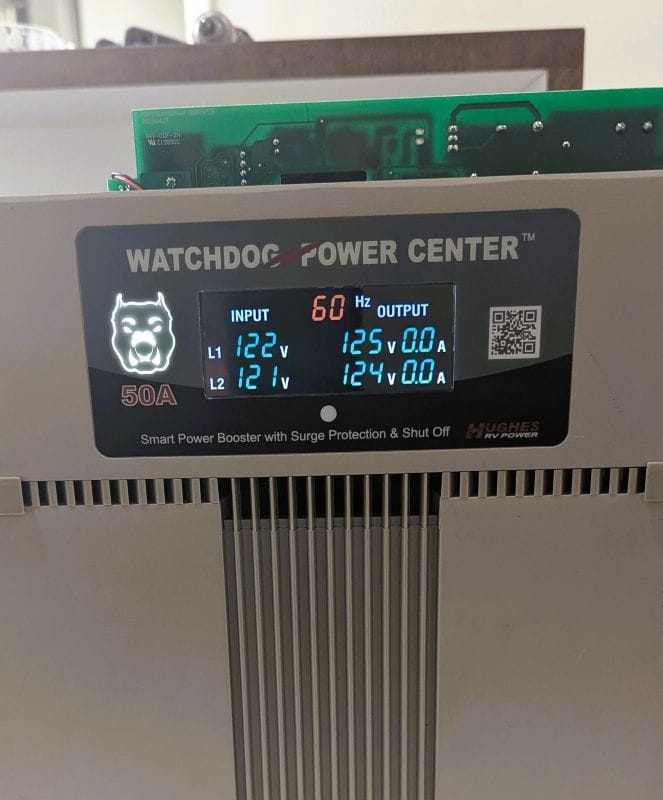
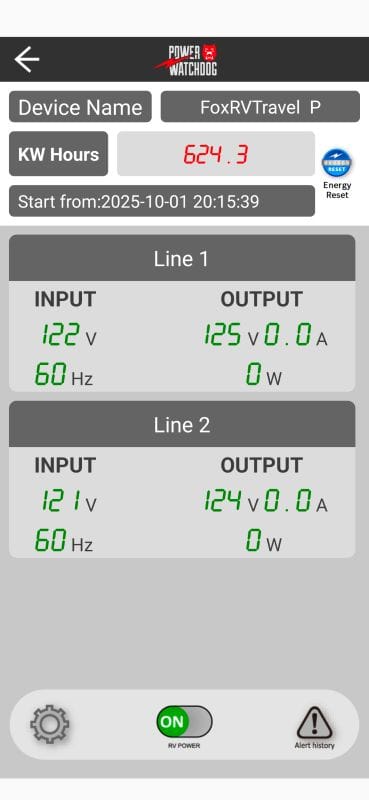
We can monitor our Watchdog Power Center in three different ways. First, the unit’s screen displays real-time information about its function.

The next picture I took from the Hughes advertisement on Amazon shows a fault on the 30-amp Watchdog Power Center. This is similar to what the display screen would have looked like if I had taken the photo during the fault.
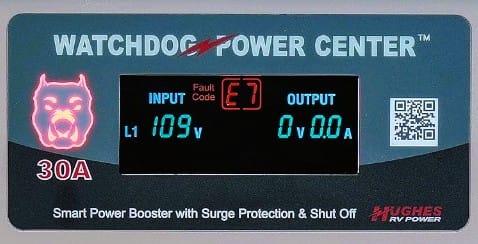
Since I installed the Watchdog Power Center in a lower compartment of our RV, checking the status screen isn’t easy and requires me to go outside. Instead, I usually just look at the app on my phone.

About the surge protector
I have always had a surge protector to protect my RV from voltage spikes. Both my first and our current RVs already had surge protectors installed when I purchased them. On my new RV, I replaced my simple surge protector with a Hughes Power Watchdog because it had the Emergency Power Off function. Back in 2021, I added a new twist to my quest about how best to protect my RV from voltage spikes (commonly called power surges). I doubled my surge protector by adding a Hughes Autoformer to my Hughes Power Watchdog. I was so impressed with these products that I wrote a well-received article for Family RVing Magazine. Here is a link to that story. Correct Campground Voltage
Our new surge protector died
Even though I have been living in our RV for the last eight years, I have never had a big enough surge to destroy any of my surge protectors. Had I stayed in San Diego instead of going to the desert, I would probably still report that I remained prepared and lucky. Usually, surge protectors don’t die all at once, as mine did; instead, they slowly die, one section at a time, until they are “used up” and no longer function.
How did we know we had a problem?
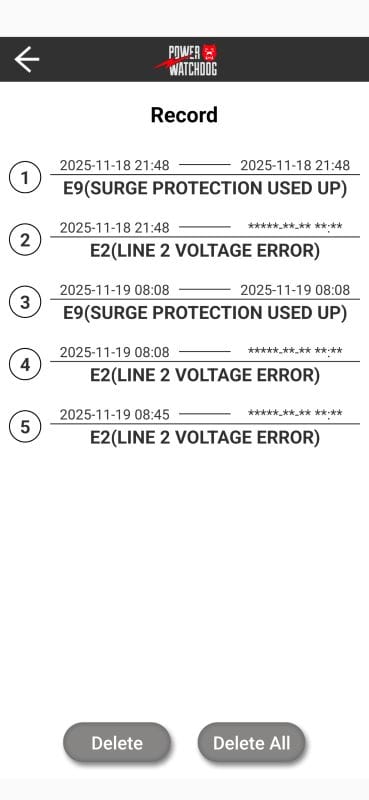
As everyone knows, we have an unusually wet winter in the Southwest. Somewhere in the power grid, there was an abrupt increase in voltage, and during this increase, we were plugged into the campground power grid. Our surge protector died on November 18 at 9:48 PM while stopping a surge on line 2. In the RV, we didn’t notice anything. Since our RV was protected by our Watchdog Power Center surge protector, we didn’t notice anything. Had our RV been plugged into the power grid without a surge protector, we probably would have noticed when something in the RV died (something like our microwave oven and television).
When I checked the Watchdog Power Center app, I could tell my surge protector had died by looking at the event history page.
How does a surge protector work
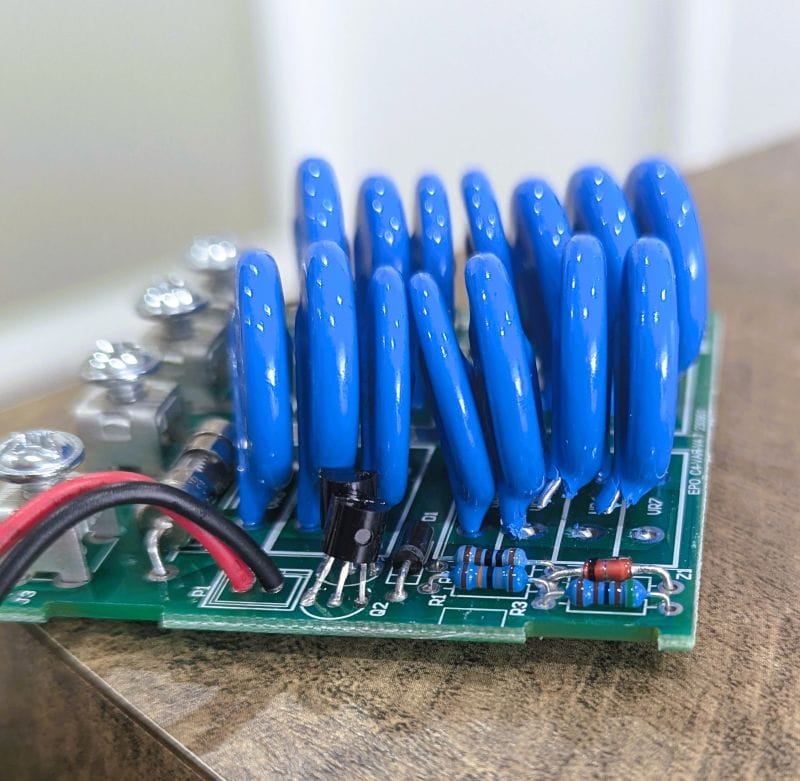
A surge protector has several small devices that route excess voltage directly to the ground wire rather than to your electrical system, protecting your RV. These devices are called Metal Oxide Varistors (MOVs). Each surge destroys the MOV that reroutes it to ground, protecting the RV. Our surge protector had fourteen MOVs to absorb multiple surges and keep working.
Replaceable surge module
The MOVs are all on a single small circuit board inside a plastic box that anyone with a standard Allen wrench and a Phillips screwdriver can swap out, putting the Power Watchdog, Autoformer, or, in our case, our Watchdog Power Center back into service. For our RV, we could have easily replaced the surge module on any picnic table. Instead, I removed Watchdog Power Center and installed our old Power Watchdog.
I removed the Watchdog Power Center because I needed to replace the surge module. I also knew that our route would take us near the main office of Hughes Watchdog, and we could make the repair on their test bench rather than my picnic table.
How to replace the surge protector in a Watchdog Power Center.
The first step to replacing the surge protector in a Watchdog Power Center is to remove the lid.
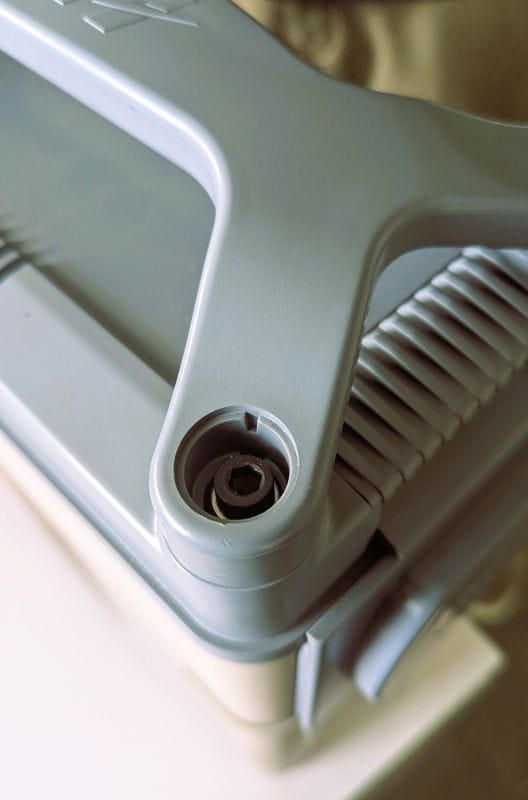

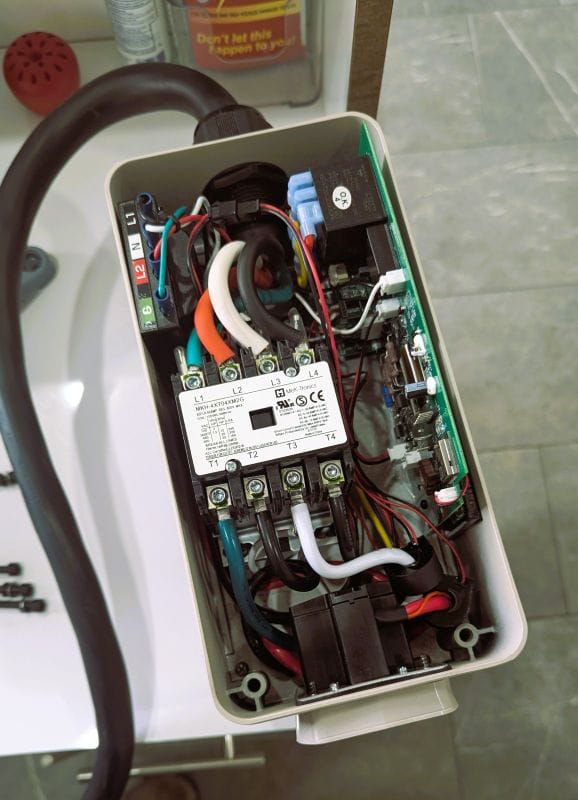
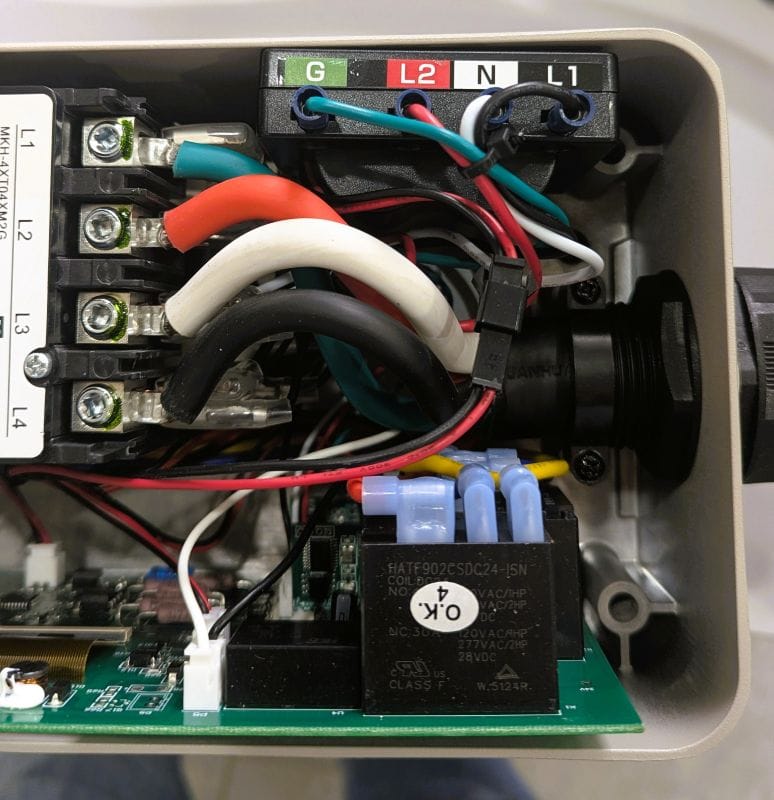
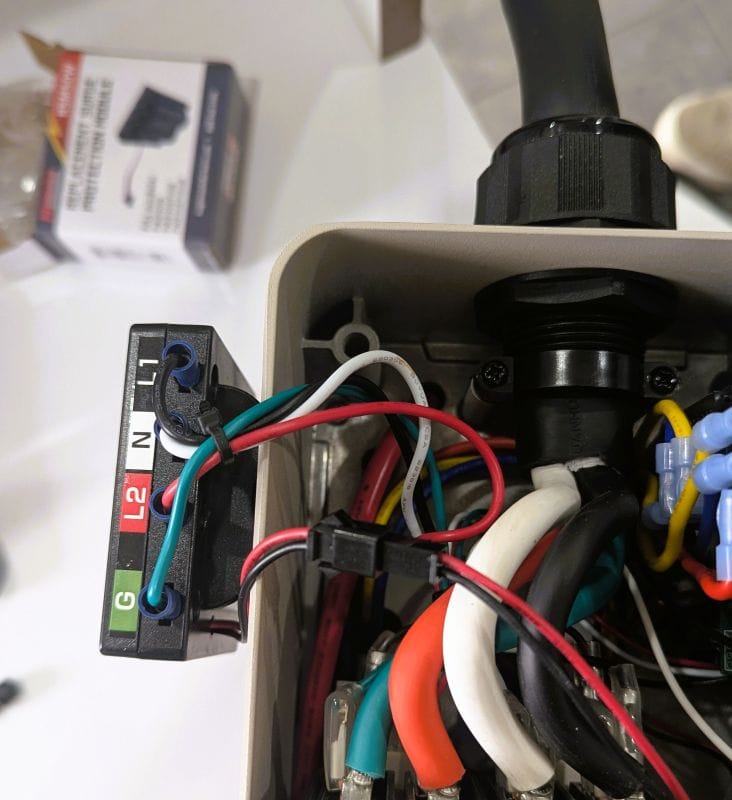
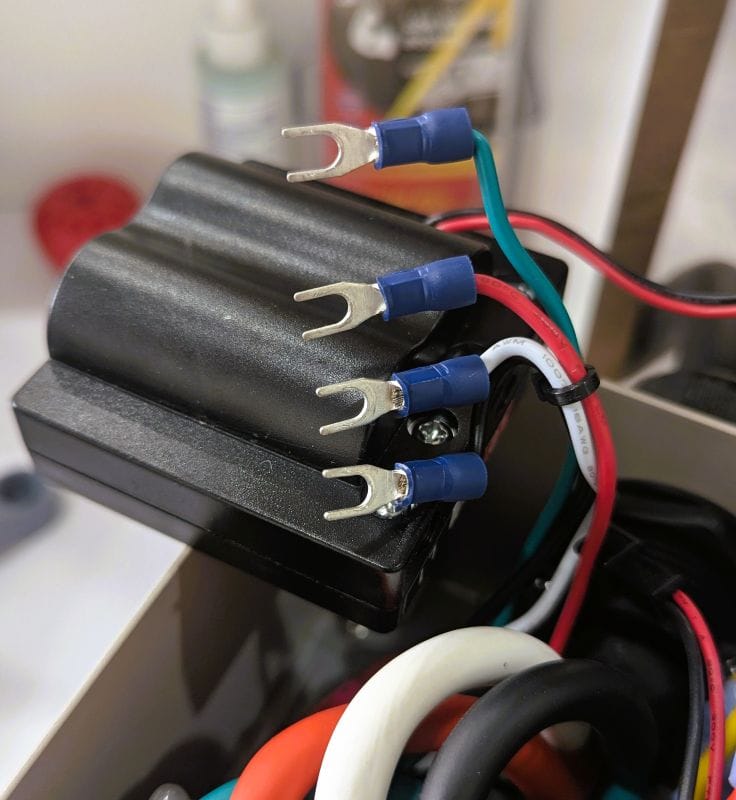
To reassemble, you conduct the previous steps in the opposite order.
What was wrong with our surge protector?
The following photo shows a close-up picture of the MOVs.

At the Hughes Watchdog main office
Since I replaced my surge protector module at the office rather than on a picnic table, I was able to hook my Watchdog Power Center to a test box. Mostly, the test box provided me with some entertainment of what would happen if you had a fault. Here are some screenshots from watching some of the tests.


Dave’s video about replacing the surge module in a Power Watchdog.
Conclusion
Even though I had years of good luck, I was prepared for the day I might have a voltage spike by always keeping a surge protector. I’m glad the Watchdog Power Center picked up the surge and protected our RV. I am also glad the surge module was so easy to replace without having to replace the entire unit.
Please subscribe and join us on our journey.
We will add you to our email list and send you updates about new articles. Here is a link. Subscribe
About our links
As you are aware, our blog’s income is zero, which enables us to remain independent and tell the truth. We do not get income or commissions. No, we don’t make paid endorsements. We don’t make recommendations; instead, we will tell you what we like (or dislike). The links are only provided as a quick reference to help our readers.
Links
Watchdog Power Center 50 amp with Wifi and Bluetooth
Watchdog Power Center 30 amp with WiFi and Bluetooth
Power Watchdog EMS w/ EPO 50 amp
Power Watchdog EMS w/ EPO 30 amp
About comments
We love seeing your comments, but please note that they are not automatically posted. I get about 20 spam comments every day, so I have to turn off automatic comments. I read and then personally publish every comment to protect the blog, keep it on topic, and maintain its authenticity. You will not see your comment right after you hit submit. Sorry for the delay in publishing your comments. Some comments come from personal emails and Facebook. Please know that we would love to hear from you.
I asked: if you did not have a surge protector, could a surge cause an electrical fire in your coach? Also mentioned that we’re seeing more RVs at the helicopter museum, but usually smaller rigs than yours. Best to you and Tami for the New Year and safe travels. Chip
A voltage spike typically does not have enough time to create an electrical fire. Instead of a fire, the extra voltage will damage small devices, such as electronic components, in consumer electronics like televisions. Fires are created by unrestricted electrical flow that bypasses the load. We use the term short-circuit to describe the situation. If there is no load, then the smallest item in the circuit, usually the wire, will become the load and get hot enough to create a fire.
Good points. I did a video on replacing the module in our Watchdog surge protector. Such a great idea instead of buying a new one at full price. I’m amazed at how many people don’t use one until they experience a problem. As you say, you may never have a problem, but when you do, that is it for your rig if you don’t have one.