
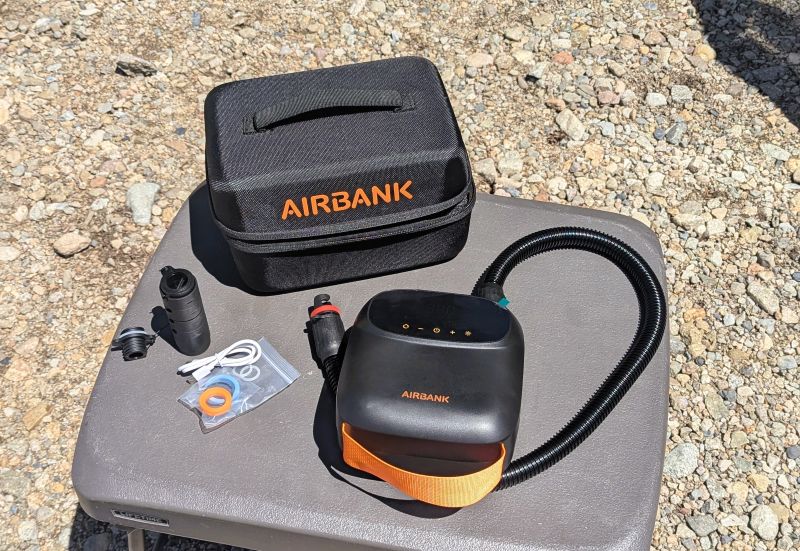
We carry these air pumps in our RV to keep all our toys (including our RV) running correctly at the correct air pressures. Right now we are camping at a remote location in Idaho. We can’t run down to the local mechanic or call someone to help us because, for example, we have low air pressure in one of our tires. Not long ago, we added a new tool to our kit to keep our new inflatable kayaks at full pressure.
Table of Contents
Starting with the oldest tool and ending with our new kayak pump, here is the list of air pumps, how they work, and why we carry them.
Bicycle air pump
As I promised, I am starting with the oldest tool. My bicycle frame pump is more than 30 years old. It is old enough that the bicycle company has gone out of business (and been absorbed into another company).
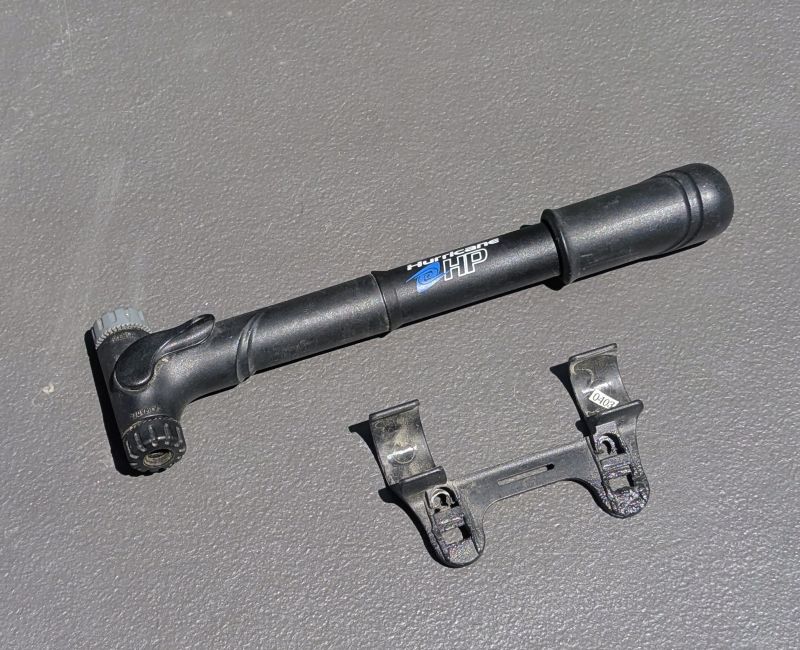
My new electric (bike) tire air pump
While my bicycle pump is a relic I no longer use, I still have it. I gave away my bicycle garage-style air pump when I got this portable electric air pump.
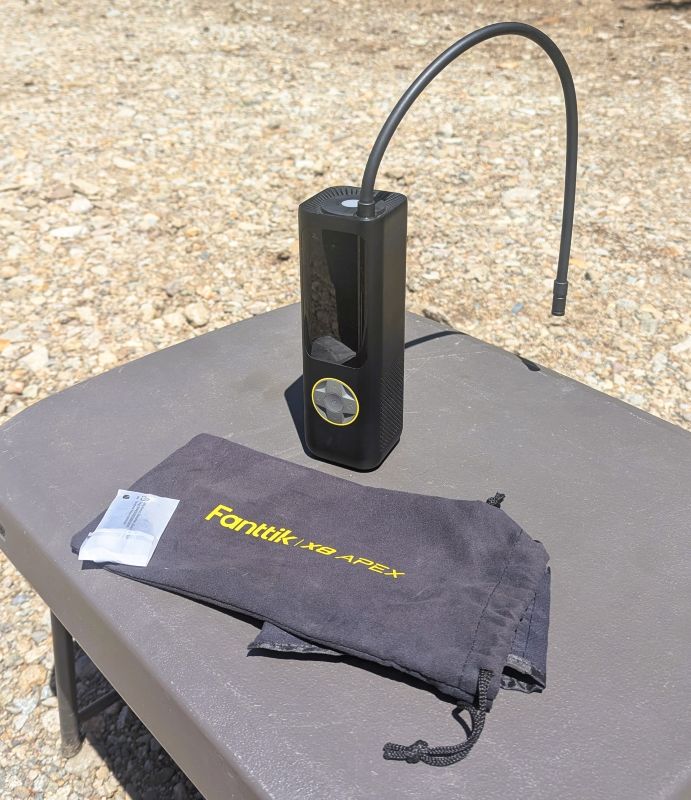
This small air pump works great for my bicycle and has a built-in battery with USB-C charging. The claim is that it can create up to 150psi. I only use it to about half that pressure. The biggest limitation isn’t pressure but rather volume. There is no way this tiny air pump could ever inflate my RV tires without almost certainly self-destructing and running out of battery power multiple times. If you want to top off a car tire (I tried it a few times), it will do that. I am going to keep it in the car.
A great thing about this air pump is that you can set it to pump up to but not exceed a specific pressure. Once you select the pressure and turn it on, it will then turn itself off when it is done pumping.
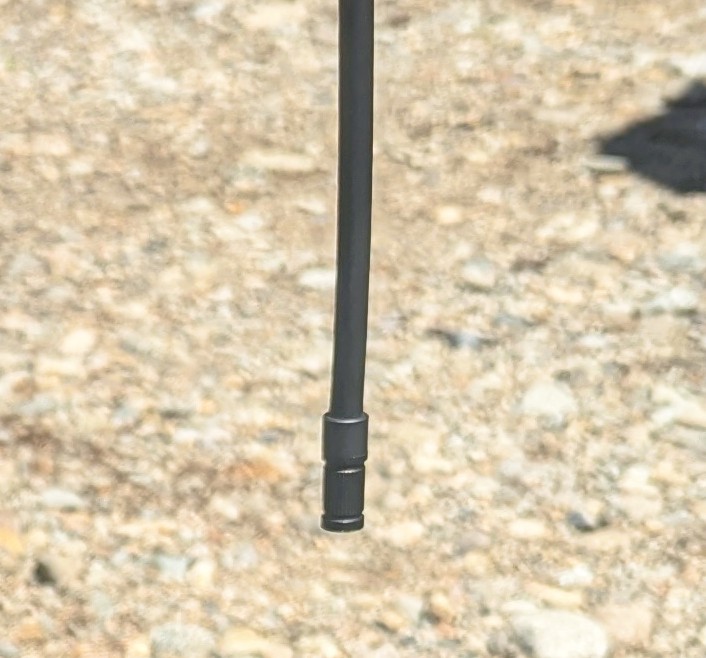
It is a great air pump for inflating my bicycle tires, thanks to its built-in chuck. The chuck is for Schrader valves and is perfect for me. I no longer use tubes with Presta inflation valves. All car tires have Schrader valve stems. As for this pump and car tires, I only use it to top off the pressure.
The one complaint is about the Schrader air chuck. I have to lubricate it frequently to keep it spinning enough to thread onto my bicycle tires. I use silicone spray lubricant, but honestly, it shouldn’t require it, especially not every time I use it.
RV compressed air supply
Our first RV did not have a built-in air compressor. Our current RV can’t drive without its air compressor. The onboard air compressor inflates the air suspension and provides air pressure to release the brakes. The only thing required to inflate a tire is an air hose with a Schrader chuck. Overall, it is quite overkill to use the RV air compressor to inflate a tire, so I have never used it for that purpose. It seems wasteful to run my (big) engine just to create enough air for such a minor task.
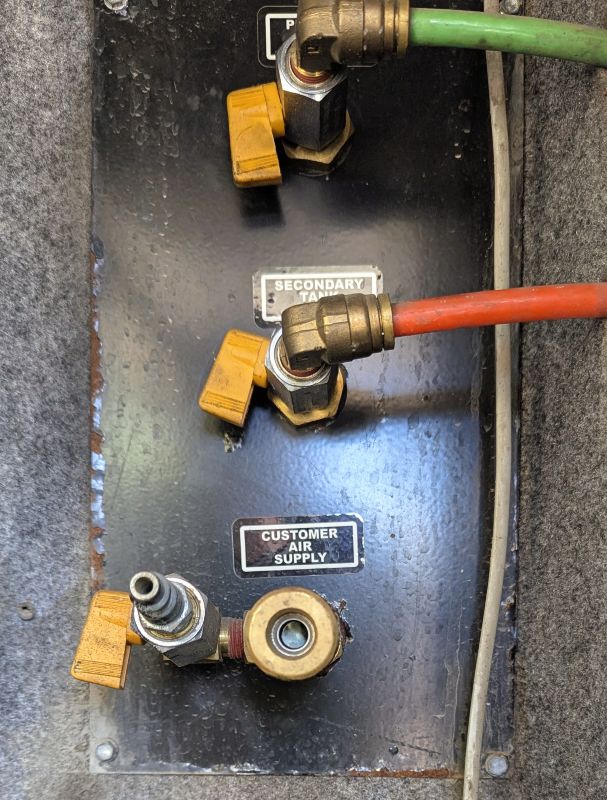
My portable air compressor
My portable air compressor is a tire inflator designed for large RV tires.
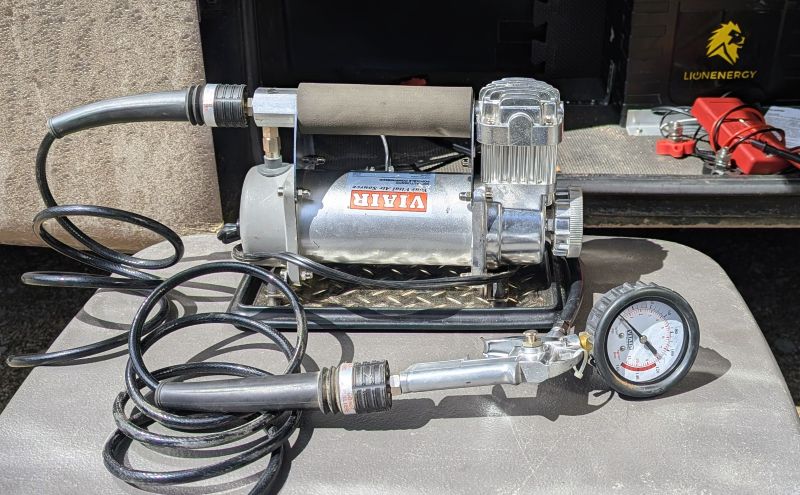
The VIAIR 400 automatic air compressor
Unlike my bicycle-sized electric air compressor, this one gets the job done even on my big RV tires. Instead of relying on an internal battery, you hook this one directly to your car battery or, on my RV, to either the chassis battery or the 12-volt house battery. It is good for higher-volume tires and able to pump our large RV tires to their maximum operating pressures.
VIAIR calls this air compressor “automatic,” but I am not sure why. The only automatic thing it does is turn itself off when you are not inflating. Compared to the FANTTIC tire air pump above, which lets you set a desired pressure and runs until it reaches it, the VIAIR air pump is very manual.
The enclosed air hose is 30 feet long, so I added a second hose to the VIAIR air pump to reach the tire in the far corner while using it.
The duty cycle for the VIAIR air pump is 33% at 100 psi. I take this to mean that, if inflating at 100 psi, you inflate for 1 minute on, then 2 minutes off, to allow the pump to cool. It goes a little slowly, giving the pump time to cool between tire uses, and typically, at 100 psi, the inflation rate is slow enough that you only get 1-2 psi per minute.
I guess I am doing it right. My pump is eight years old and still works fine.
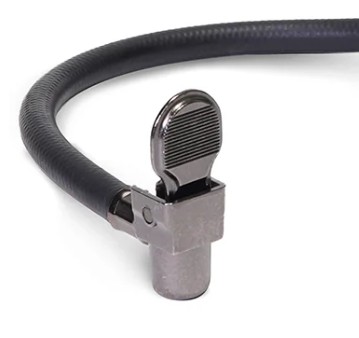
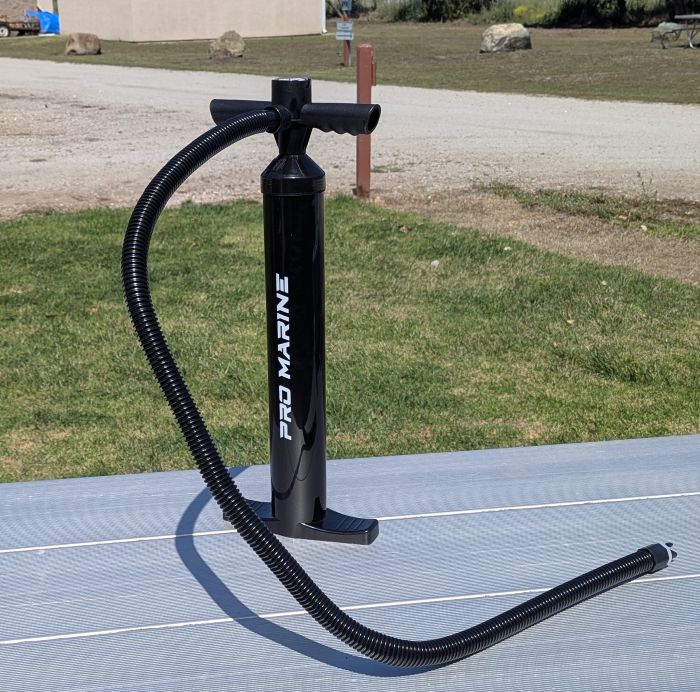
Our manual pump for our kayaks
Pro Marine included this manual pump in our kayak kits. It is similar to the pumps, both in operation and to the manual inflatable boat pumps I have used for the last thirty years, with one improvement. It has a gauge on the top so you can tell how much air pressure you have put in the boat.
AIRBANK PUFFER Pro for our kayaks
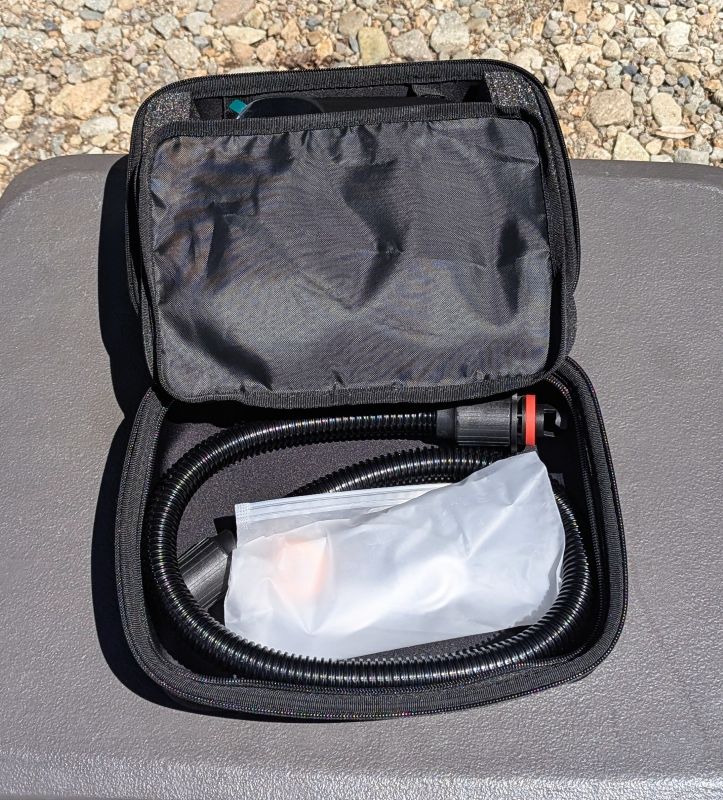
I knew the above air pumps would be completely unsuitable for inflating our kayaks. They don’t need high pressure on the tires; rather, they need quick volume, then convert to high pressure to top off the inflation. I used to carry two pumps to accomplish this goal. I have also used the exhaust from my vacuum to do the first part, then finished the process with a hand pump. (photo of the AIRBANK PUFFER Pro at the top).
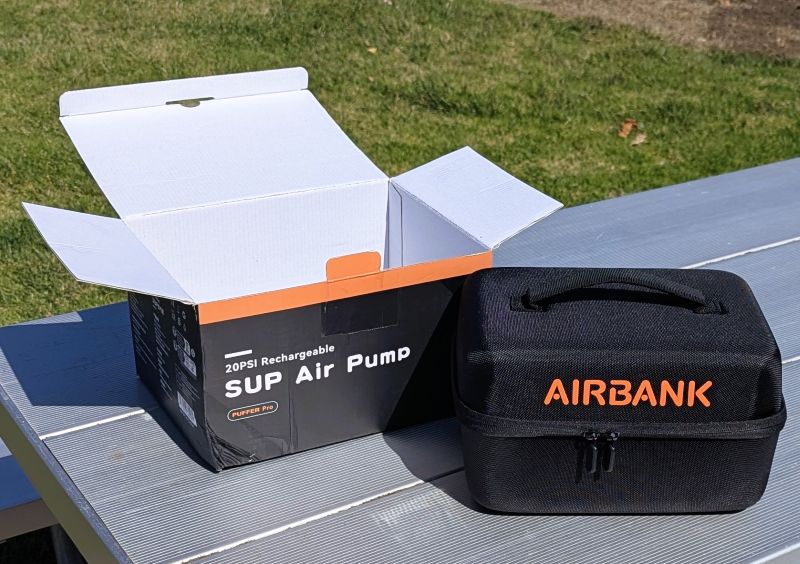
Our kayaks came with hand pumps, which, if you have any experience with the subject, are leagues better than foot pumps. But the hand pumps were not strong enough to fill the kayaks completely. Only eight years ago, hand pumps were the best you could expect to use. That was all before my AIRBANK PUFFER Pro arrived and I gave my manual pumps to charity.
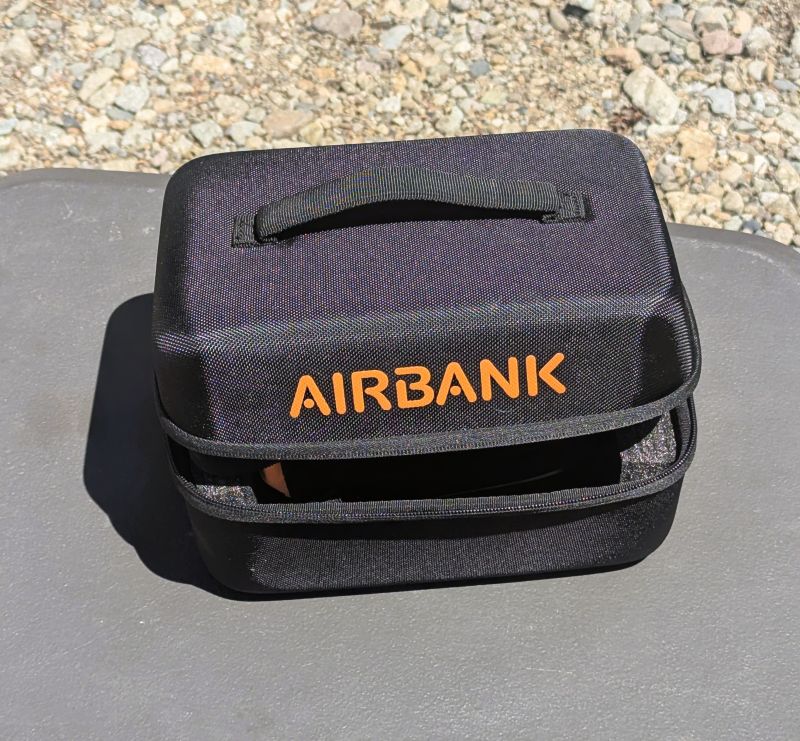
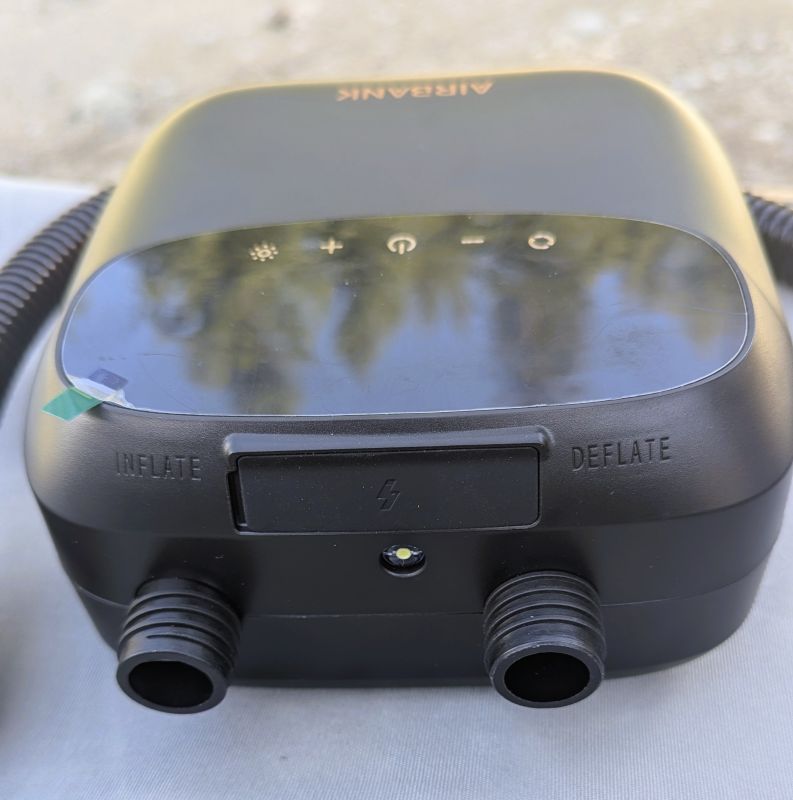
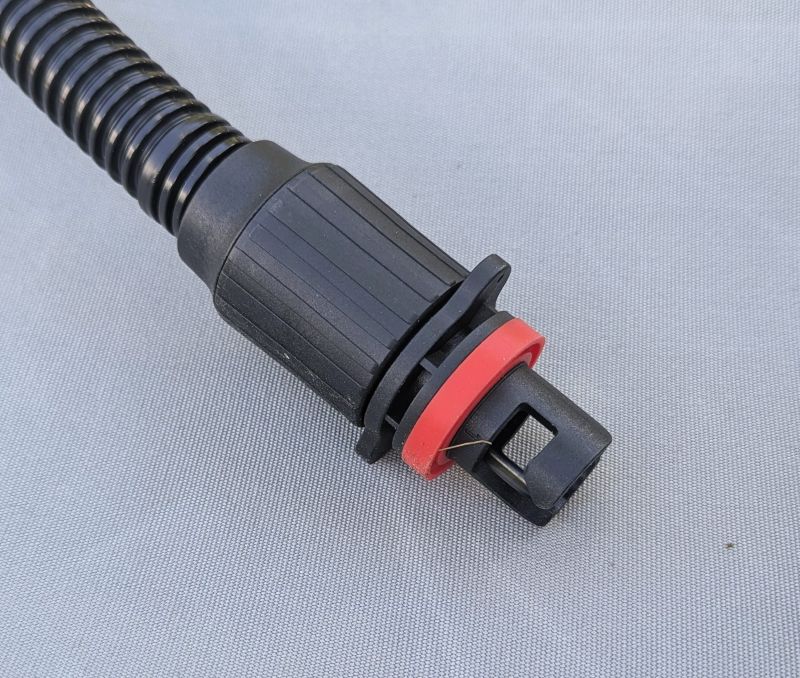
The AIRBANK PUFFER Pro could never fill a car or a bicycle tire. It isn’t designed to do that, just like the pumps above would never be able to fill my kayaks. Like the above air pumps, the AIRBANK PUFFER Pro has a built-in piston-style air pump that takes over after the built-in fan finishes the bulk inflation stage. The sound completely changes when you use it, and what I had to do with two pumps is done automatically to a preset pressure. This two-stage inflation process is exactly what I did in the past, except I had to use two pumps.
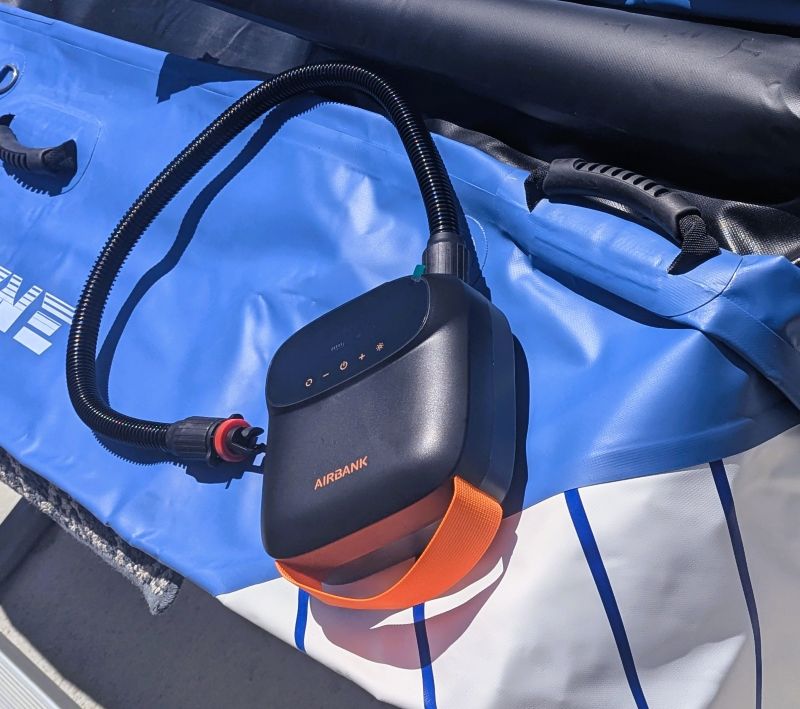
After charging the pump battery with a USB-C cable, it is ready to return to its case. In the last two months, the charge level has not changed even though I have used it several times. The battery is supposed to deliver enough pressure to inflate several paddle boards (much higher pressure than our kayaks) before needing to be recharged. An additional feature is that you can plug in a cell phone to the USB-C port and use the pump as a power bank. I haven’t tried this feature yet, but it seems like a great idea.
If, for some reason, you have a dead battery, you could run it while it’s plugged into a 12-volt power source. I have not tried this because once I inflated it, it always had plenty of charge to fully inflate my kayaks. I don’t see the need for this function, but it is nice to have. My air pump did not come with a 12-volt charging cable, but I am sure I have one somewhere if I ever needed that function.
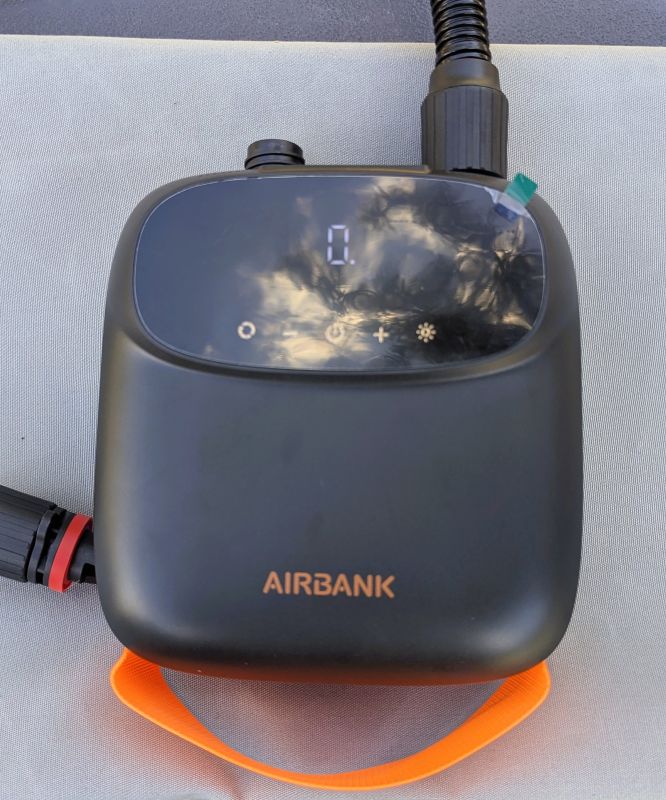

Best practices when using air pumps.
Any air pump used to create high pressure generates heat. A thoughtful inflation technique prevents heat buildup, or at least limits it, when using the pumps. My VIAIR tire pump inflating my RV tires gets very hot. I try to limit heat buildup and maximize battery life, giving the air pump time to cool down between tires.
How I inflate my kayaks
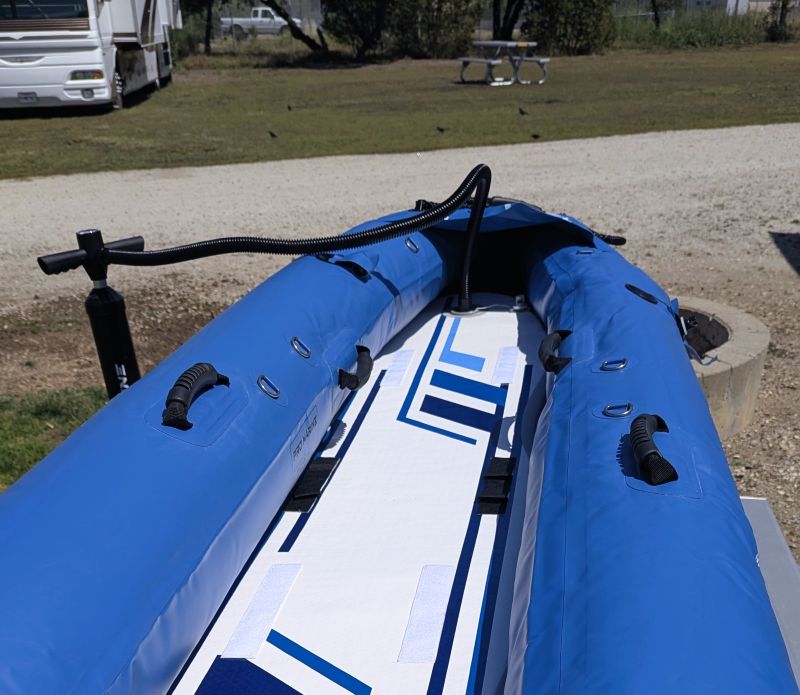
I first lay out the kayak and set the pump to 0.5 psi to inflate the floor and side tubes. I always stop inflating the side tubes well before they reach 0.5 psi, so I can adjust the kayak’s shape while it’s still partially inflated.
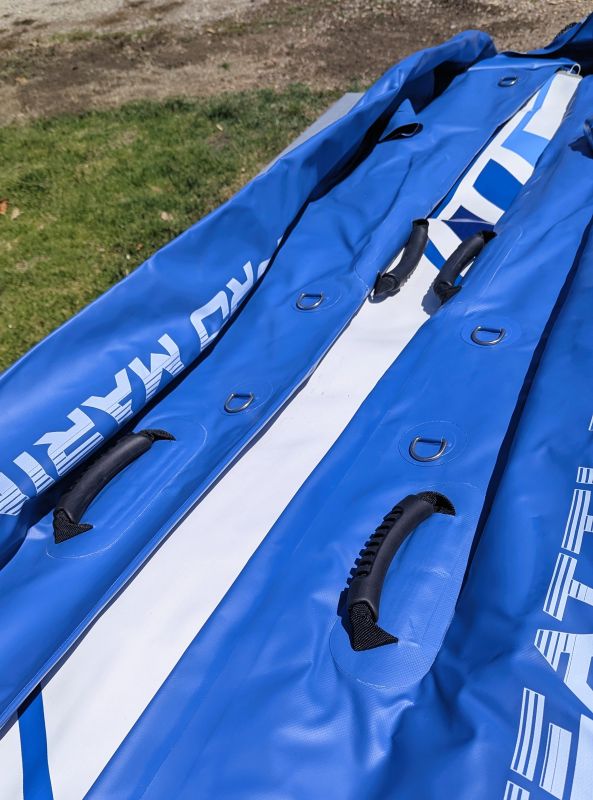
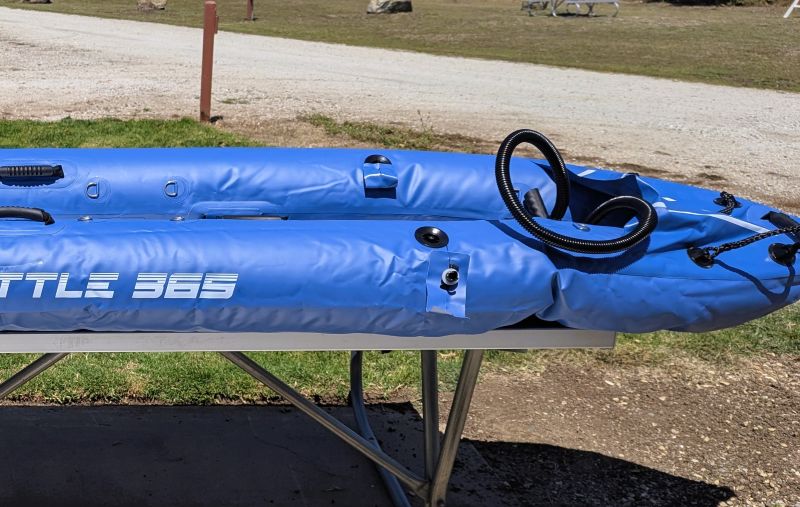
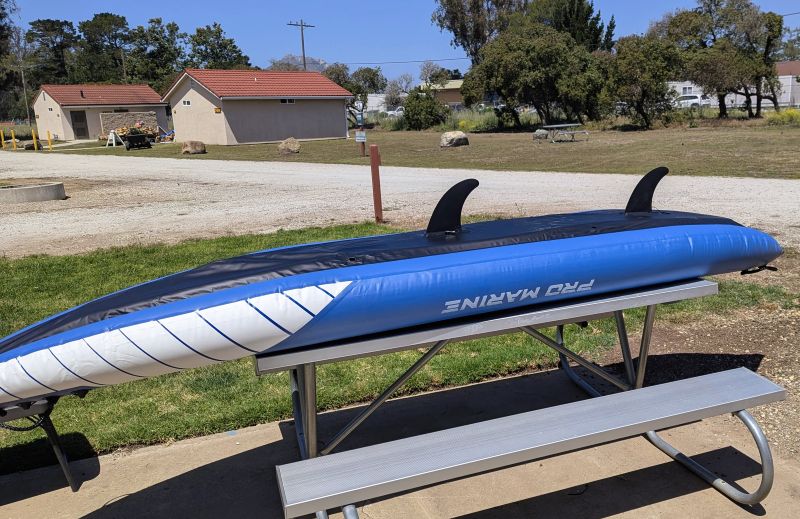
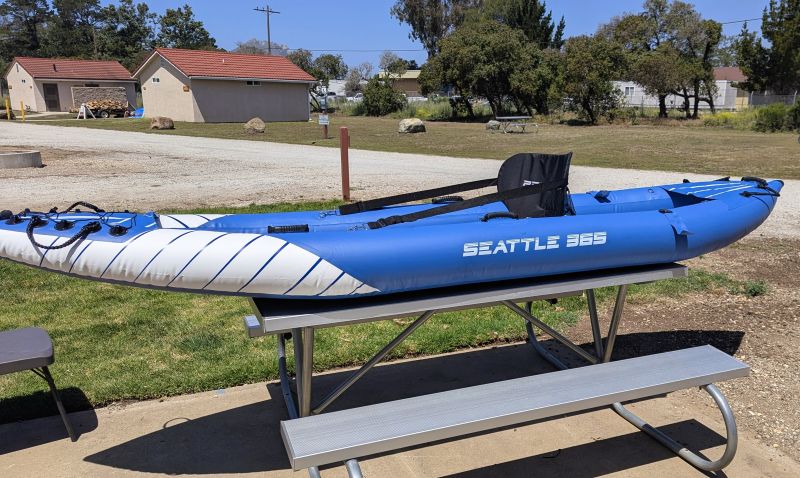
With the side tubes very soft, I switch to the floor, bring it up to a firm but still partially inflated state, and make another adjustment if needed. After everything is partially inflated and adjusted, I switch back to the side tubes and bring them up to a firm state before switching back to the floor. The limit for the side tubes is 2.9 psi, and the floor is 8 psi. I never inflate them to maximum, but I assure you they are extremely firm.
Conclusion
I have always heard the saying, the right tool for the right job. I am pretty satisfied that I have the right tools to inflate and, in the case of the AIRBANK PUFFER Pro, deflate all our toys and tires.
Please subscribe and join us on our journey
We will add you to our email list and send you updates once a week. Here is a link. Subscribe
About our links
As you know, our blog income is zero – this allows us to be independent and just tell the truth. We do not get income or commissions. No, we don’t make paid endorsements. We don’t make recommendations, but instead, we will tell you what we like (or dislike). The links are only provided as a quick reference to help our readers.
Links
FANTTIK X8 Apex portable air pump
VIAIR 400 automatic portable air compressor
AIRBANK PUFFER Pro high-pressure inflator
About Comments
We love seeing your comments, but they are not automatic. I get about 20 spam comments every day, so I don’t allow automatic comments. I read and personally publish every comment to protect the blog and keep it on topic and real. So what this means for you is that you will not see your comment right after you hit submit. Sorry for the delay in publishing your comments. Please know that we love hearing from you.
Thanks for sending us this update. We often wonder how you accomplish your repairs while traveling.
As you know, we also have inflatable kayaks. We will need to investigate your kayak pump.