
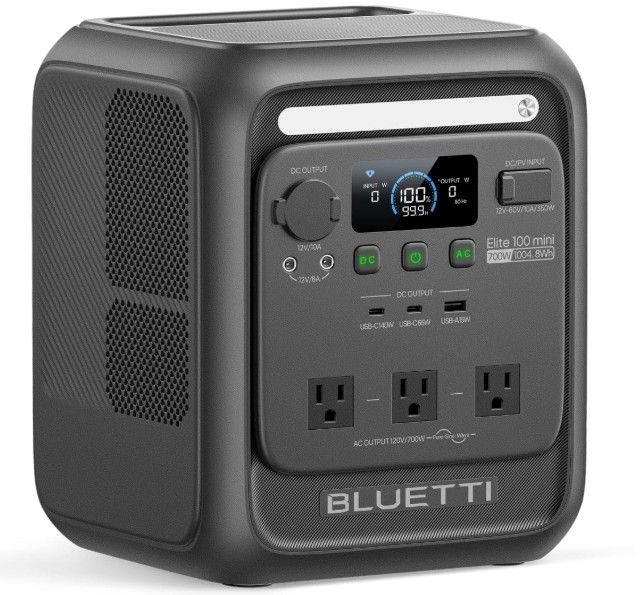
We got a BLUETTI Elite 100 Mini power station. In my 9 years of full-time RV living, I was never impressed enough to purchase a power station, and I will explain why. Some call these “solar generators.” I have joined the vast crowd of power station users and got a BLUETTI Elite 100 Mini. I am using this power station every day, even though I never thought I would need one.
Why my change of heart?
I rejected the earlier power stations because they clearly couldn’t meet my needs, mostly because the internal battery capacity was too small. The oldest power stations used inferior batteries. Then power stations got bigger and started getting my attention, but I wasn’t interested because of the price and because these newest huge power stations were big and heavy. They still weren’t adequate to replace my RV battery and solar electrical system. I didn’t want one of these new huge power stations.
I still wanted a backup.
Six years ago, instead of using the newest small-capacity power stations, I designed and built my own huge battery bank (now more than 1,100 amp hours) that could run my entire RV, plus an 1,800-watt solar array. My RV battery and solar electrical system is much bigger than any single box power station. Here is a link to my most recent article about my RV Power system. Boondocking with our new batteries after our generator died.
A solar generator?
I mentioned the term “solar generator” earlier. I think the term “solar generator” is a misleading marketing slogan. I don’t like the term “solar generator”. I think people still use the term. My problem with a “solar generator” is that they don’t “generate” anything. Instead, they store energy and discharge it through an internal inverter or as direct current. I guess the term “solar generator” stuck because they included a small solar charge controller inside the box. I prefer the term power station. A power station has a battery, a solar charge controller (It charges using both alternating and direct current), and a small inverter.
Size is a big issue
Over the last five years, power stations have grown from too small, and some are now so expandable that some can serve as a backup power source for an entire house. They went from way too small to do anything useful to way too big for my RV. I didn’t want a power station so small it was unusable or so big it would do the same thing as my RV power system. I also didn’t want a big power station because my RV already had every power-station feature built in.
Why did I choose the BLUETTI Elite 100 Mini?
The BLUETTI Elite 100 Mini isn’t the smallest option, but it is the smallest high-capacity option. It packs a large battery into a compact size.
I got the BLUETTI Elite 100 Mini to back up my RV electrical system. I learned I could really use a backup when my generator failed. We spent a week boondocking with our broken generator, then two more weeks finishing the repair. If you missed it, here is a link to that story. Then our generator failed.
The BLUETTI Elite 100 Mini is big enough to power my refrigerator if I have another electrical issue. I already used the BLUETTI Elite 100 Mini to power my refrigerator while we were in Grand Teton National Park. Even though our generator was fixed and worked fine, generators weren’t allowed in this section of the campground. We powered the refrigerator overnight using our power station, then recharged it during the day while we drove around the park.
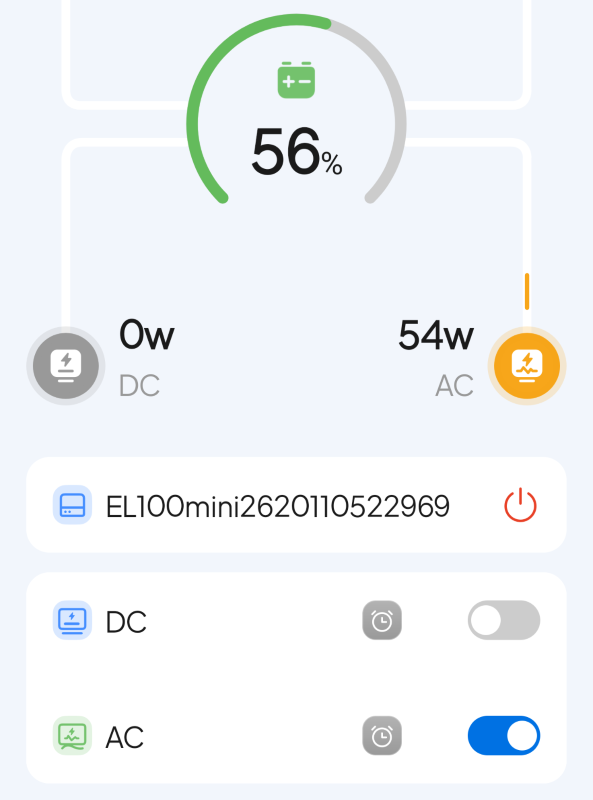
I don’t want this to sound too dramatic. Our RV power system still did most of the heavy lifting, but the shading on my solar panels made it hard to recharge our big battery, and the BLUETTI Elite 100 Mini helped by powering my refrigerator. I did this partly for fun, and partly to test it. It worked great.
I use it every day, all day long
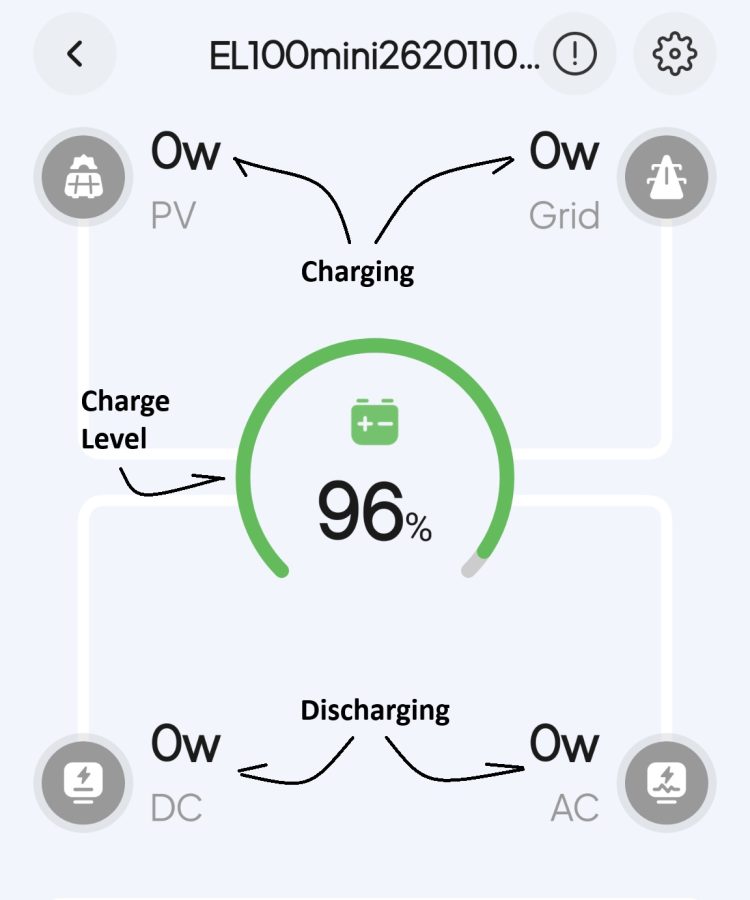
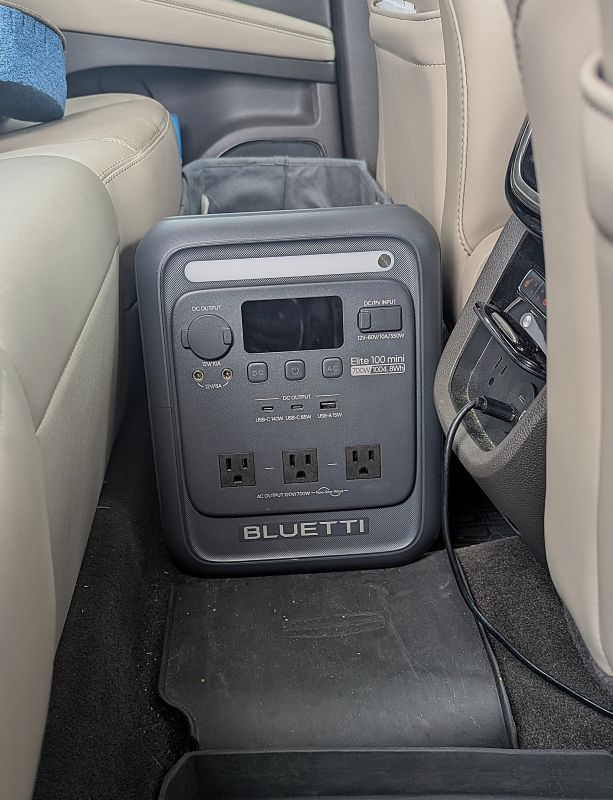
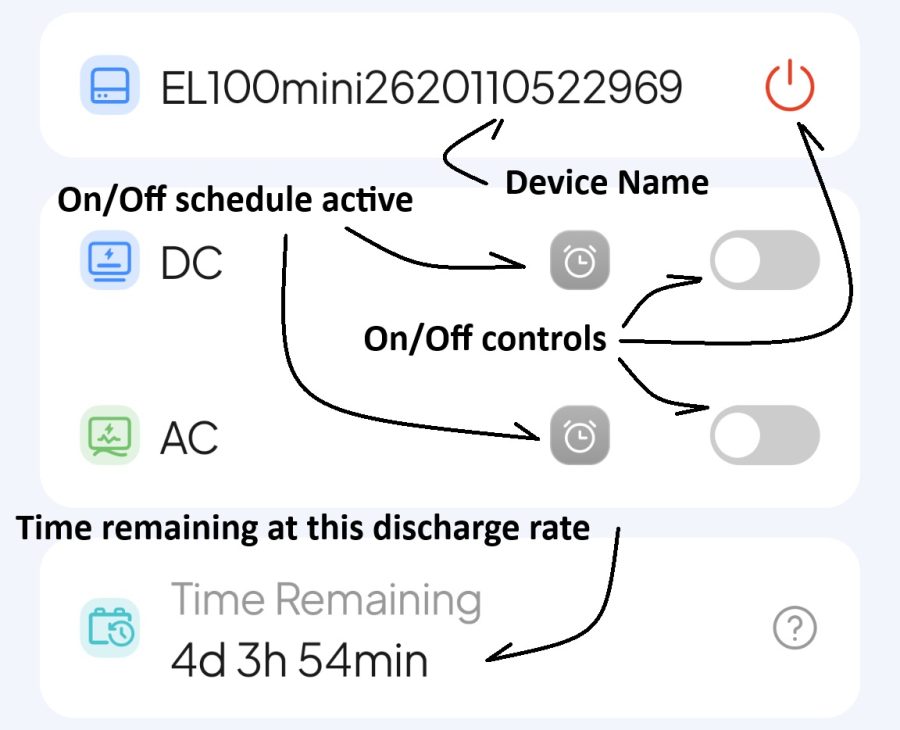
I keep the BLUETTI Elite 100 Mini in my car, sitting on the floorboard behind the front seats. It powers my Starlink Mini. It can run my Starlink Mini for two days without recharging. The BLUETTI Elite 100 Mini can power my Starlink Mini for 50 hours straight without recharging. Of course, I recharge the BLUETTI Elite 100 Mini every time I drive the car. And using the app, I can shut it down overnight when we are not using it. The key feature of the BLUETTI Elite 100 Mini, controlled from the app, makes this all possible.
You want a big enough battery
You want the smallest, lightest-weight power station with the biggest battery. The BLUETTI Elite Mini 100 weighs less than 24 pounds but sports a 1,004.8 watt-hour battery using Lithium Iron Phosphate cells. I don’t understand how this 23.59-pound package contains a 1,000-watt-hour battery and all the electronics needed to run the device. It is roughly the same size as one of my other batteries, which weigh much more for the same capacity.
You want a Lithium Iron Phosphate battery
Less expensive power stations are less expensive because they don’t use Lithium Iron Phosphate batteries. You do not want a Nickel Manganese Cobalt battery. The BLUETTI Elite 100 Mini with Lithium Iron Phosphate batteries will last for years. In terms of cycle life, Lithium Iron Phosphate batteries should last several thousand cycles, not a few hundred. Less expensive power stations cost less (initially) because they use lower-quality batteries.
You want an inverter
An inverter enables your power station to act as a backup energy source during a power failure. Without an inverter, your power station still works for direct current but not as a backup.
You want a big enough inverter–but not too big
The inverter takes the battery power and turns it into alternating current. The bigger the inverter, the faster you can drain the battery, both because you use the energy and because you waste it operating the inverter. This wasted energy is called inverter overhead. The bigger the inverter, the higher the inverter overhead and the more energy it wastes. Smaller inverters waste less of your battery power.
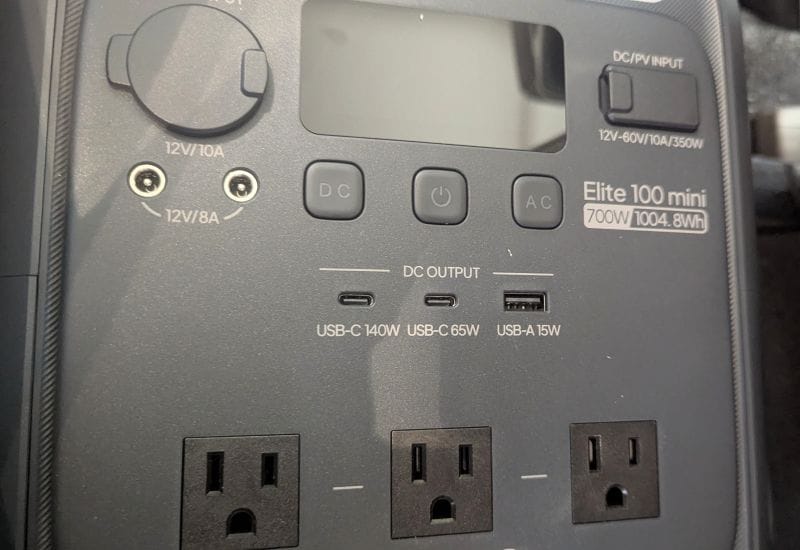
The BLUETTI Elite 100 Mini has a 700-watt inverter, big enough to power my refrigerator but small enough to be efficient. This inverter is fine for my refrigerator but not big enough for my microwave. It was not designed to power higher-amperage appliances. Instead, it was designed to be very efficient. If you need a larger inverter with the same size battery, the BLUETTI Elite 100 V2 is a good choice. Or, if you want a bigger battery and bigger inverter, go for the BLUETTI Elite 200 V2.
This power station can also act as an uninterruptible power supply (UPS), switching from grid power to power station power in milliseconds. I don’t need a UPS and didn’t test this feature because all my computers have a built-in battery, and my inverter acts as a UPS when shore power fails.
You want to be able to turn off the inverter
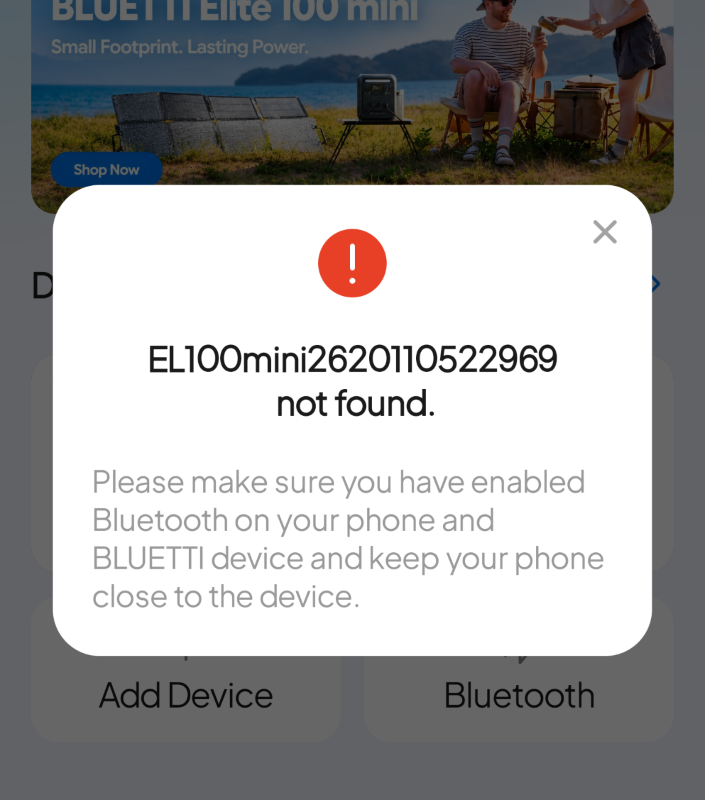
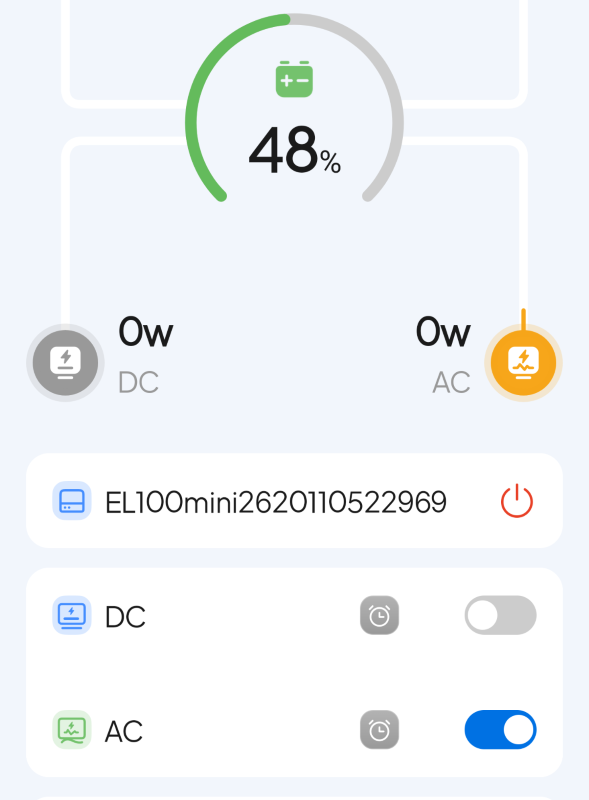
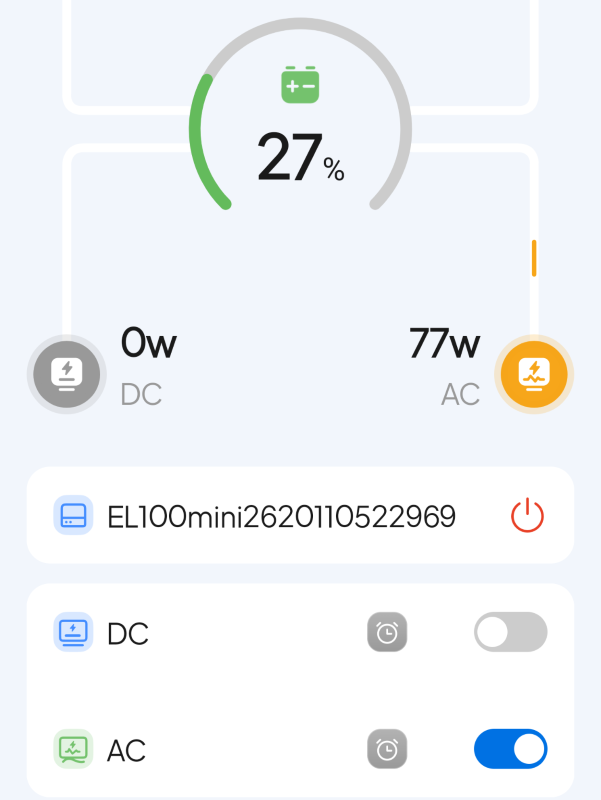
To keep the inverter overhead low, turn it off. With the BLUETTI Elite 100 Mini, you can turn off the inverter with the switch on the front or on the Bluetooth App. The app (or a button on the front) can also shut off the DC output, meaning I can control the BLUETTI remotely. Controlling the power station via Bluetooth was a requirement for me.
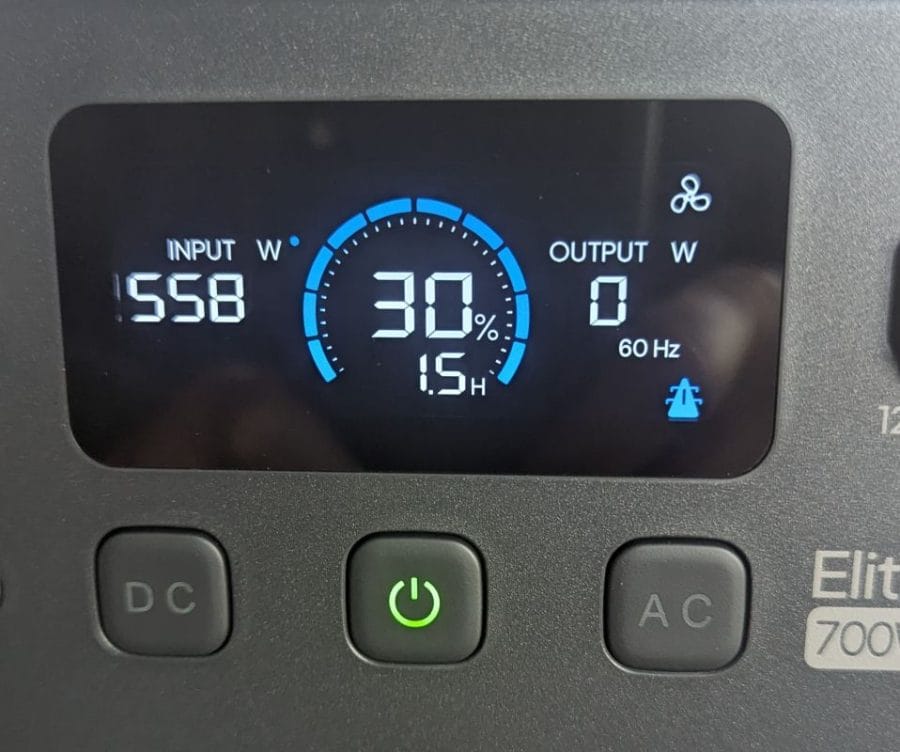
If you don’t need the inverter, turn it off. I also recommend using the app to set the power station to ECO mode for the highest inverter efficiency and longest battery life. The other benefit of ECO mode is the lower fan speed. The trade-off with ECO mode is slower charging.
You want a power station that is easy to recharge
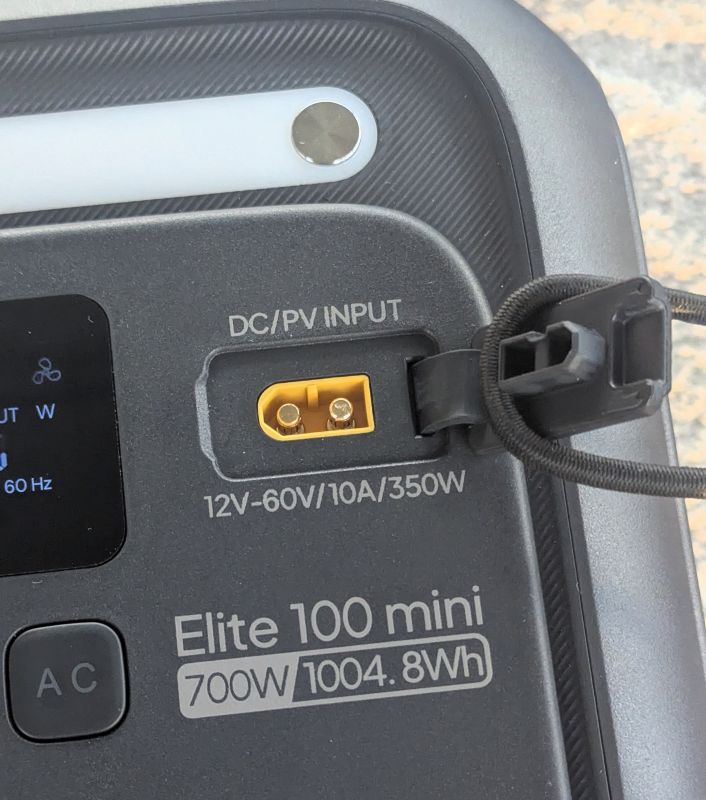
The BLUETTI Elite 100 Mini recharges from AC power or DC power. It can recharge at 700 watts per hour when plugged into a standard wall outlet. It can also recharge at 350 watts using the PV input port. PV refers to solar panels. You can charge the power station with both AC and DC sources at the same time, but only up to the maximum of 700 watts per hour.
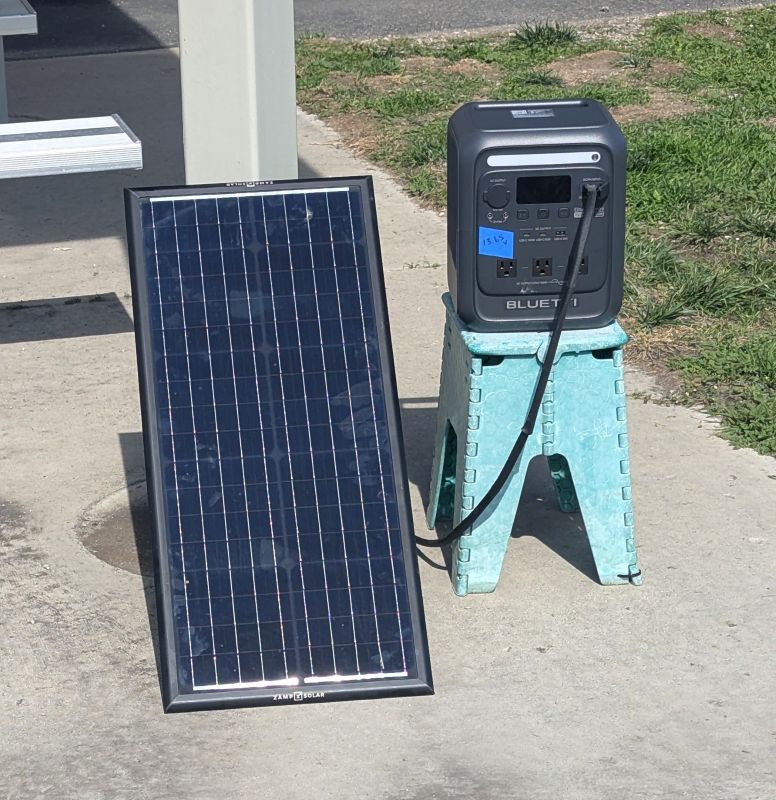
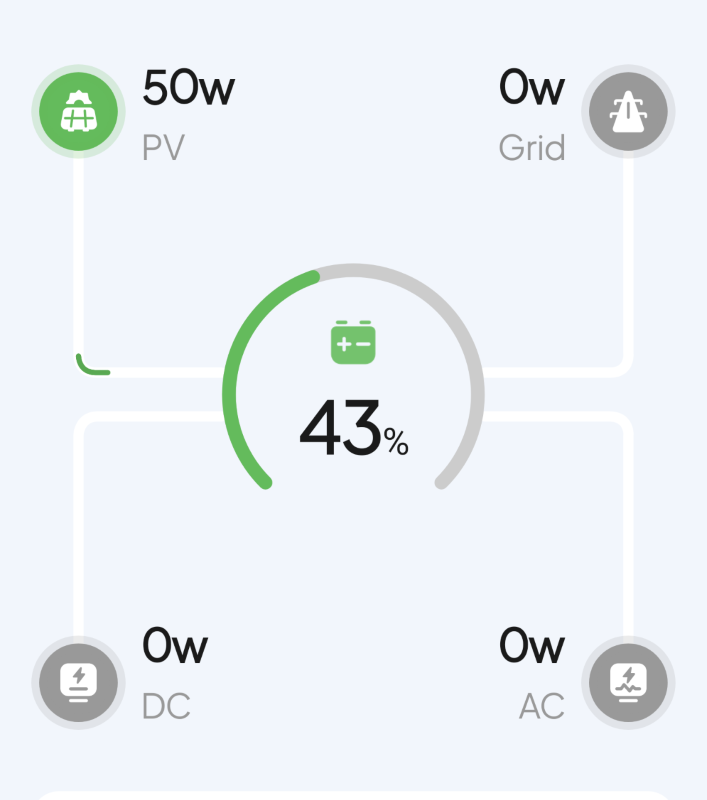
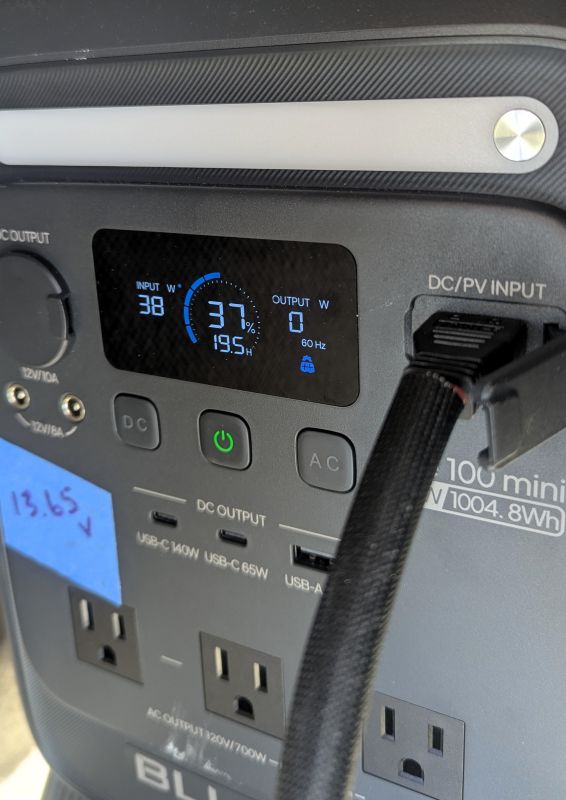
The key limitation for the solar panels is that the DC voltage at the PV port must be between 12 and 60 volts. To reach 350 watts, your charging source (solar panel) must provide more than 32 volts. At voltages below 32 volts, charging is limited to about 200 watts. You can charge the power station with both AC and DC sources at the same time, but only up to the maximum of 700 watts per hour.
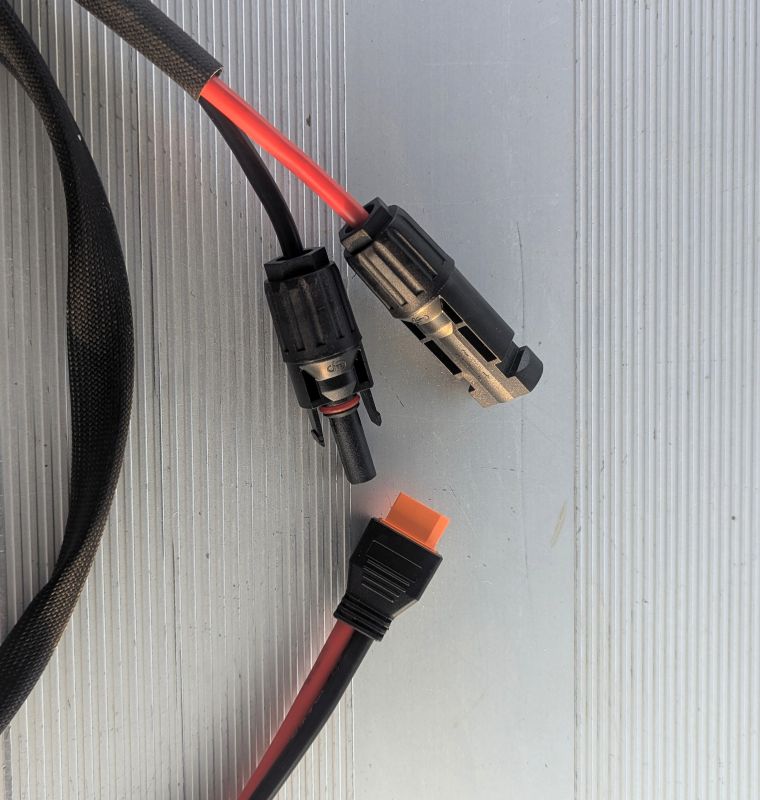
You can also use the PV input to charge the power station directly from another battery; you just need a patch cord with alligator clips on one end and an XT60 adapter on the other. Since the onboard solar controller limits the charge current, the charge rate depends on the battery voltage.
What am I doing with the BLUETTI Elite 100 Mini?
I already mentioned that I am going to keep the Bluetti Elite 100 Mini in my car. It will be a 24-hour-a-day energy source for my Starlink Mini. I don’t want to run the Starlink Mini off my car battery because of the potential discharge, and I don’t want to use the Starlink Mini only when I’m driving.
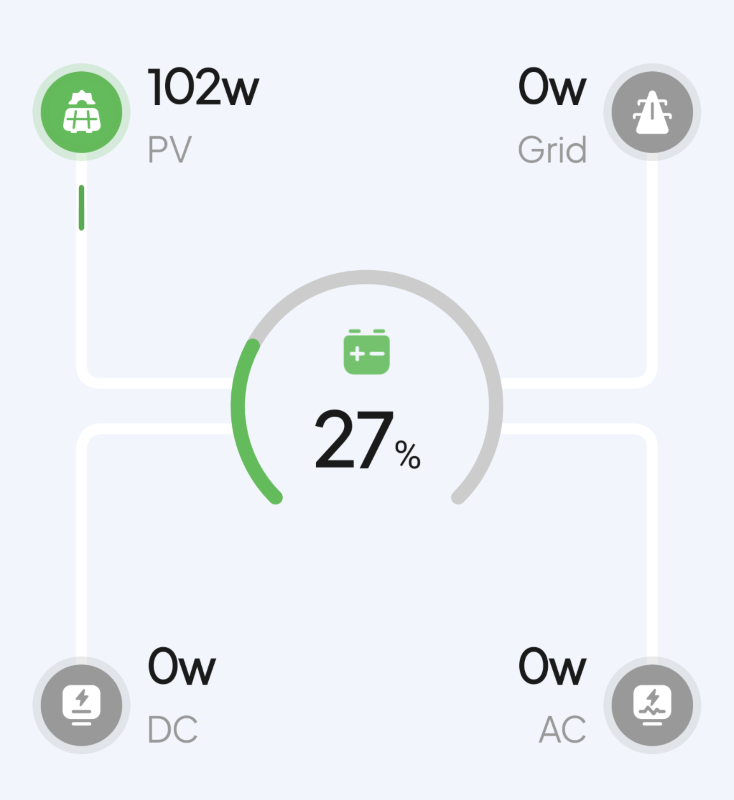
Instead of powering the Starlink Mini directly from the car, the BLUETTI Mini acts as an intermediate, 24-hour power source that recharges only when I am driving. To make the BLUETTI Mini battery last longer, I turn it off with the Bluetooth app, which shuts down power to the Starlink Mini. Someday I might add a solar panel to the system for additional charging; I am always a sucker for a solar panel.
The BLUETTI Elite 100 Mini is simple
The BLUETTI Elite 100 Mini comes with only three items. First, you get the power station and two charging cords. One is for the DC input, and the other is for the AC input. It doesn’t include any output cords. Most of the sales material is about what you can do with the output, including using the built-in area light.
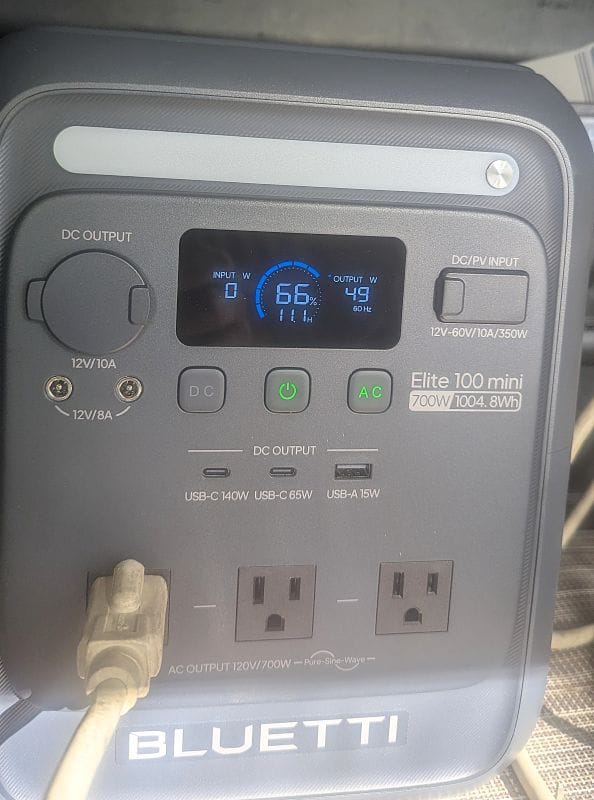
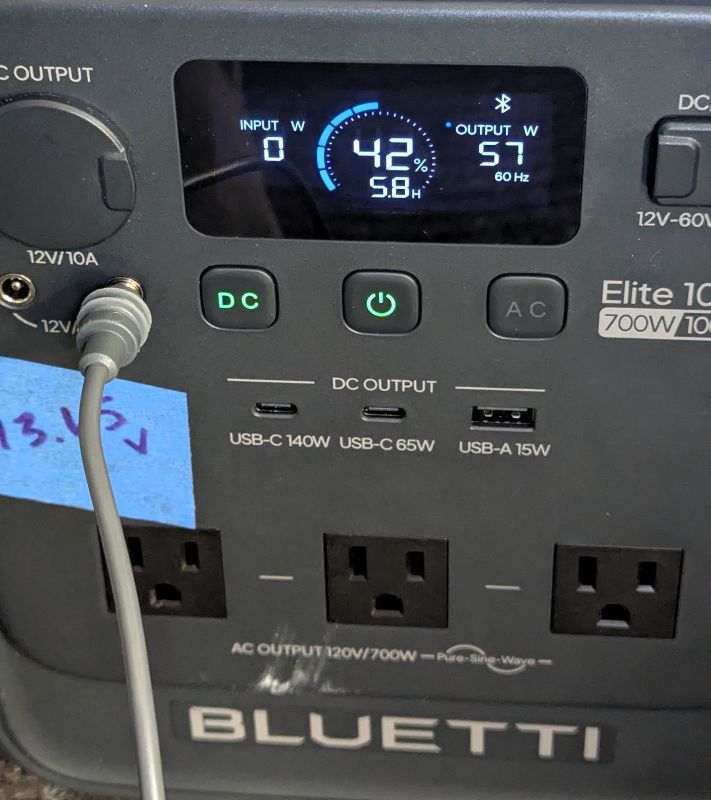
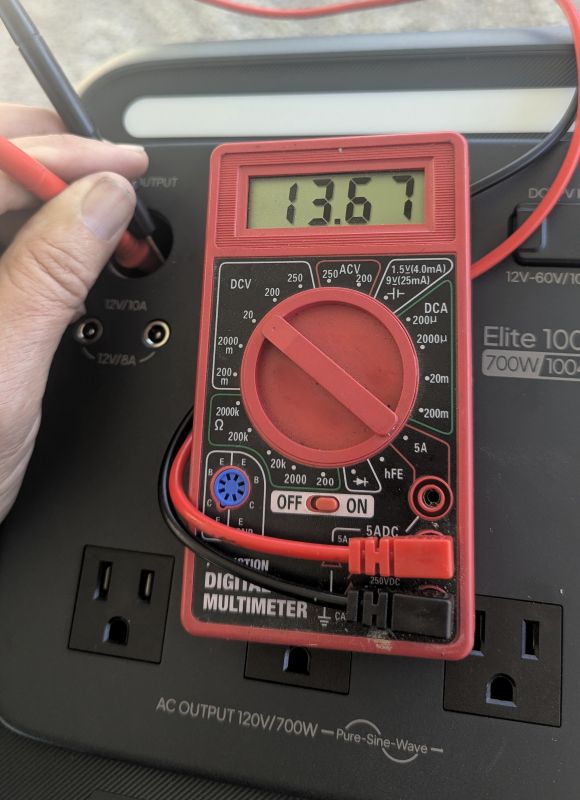
The DC5521 (round barrel connectors) are important for powering my Starlink Mini in the car. I think they are connected directly to the battery in the power station. The voltage here, even though it is marked at 12 volts, is 13.65 volts. Even though I don’t expect to use the 45′ long Starlink cord, I had sufficient voltage to make the Starlink Mini work directly from these DC5521 ports.
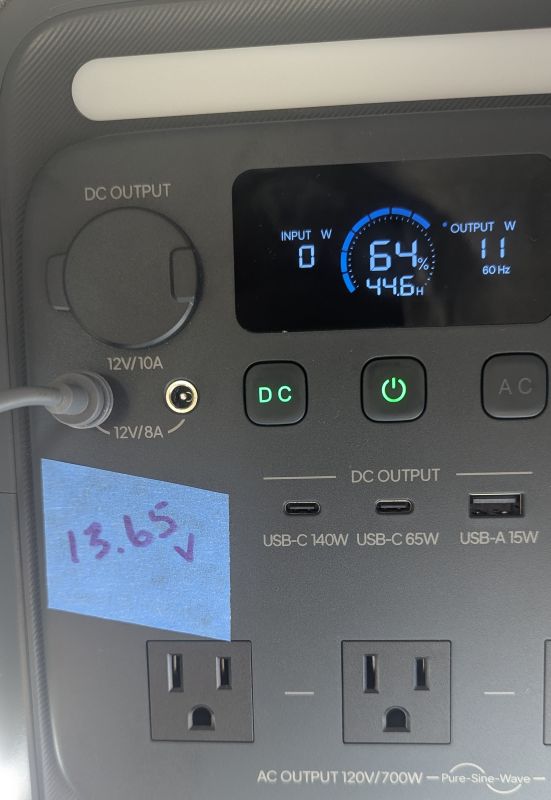
Ports:
- one 140W USB-C port
- one 65W USB-C port
- one 15W USB-A port
- one 12V car-style outlet
- two DC5521 ports
- three AC outlets (pure sine wave)
- one DC XT60 input
- one AC input
The top of the BLUETTI Elite 100 Mini power station has an easy-to-grab carry handle. You can easily move it with one hand, unlike other huge power stations. The Mini fits on the floorboard in front of the back seats in my car.
You can charge the power station using both AC and DC at the same time, and DC is the primary charging method. I expect to use the Mini with DC charging, only using AC charging occasionally.
Remote Magnetic Screen Display
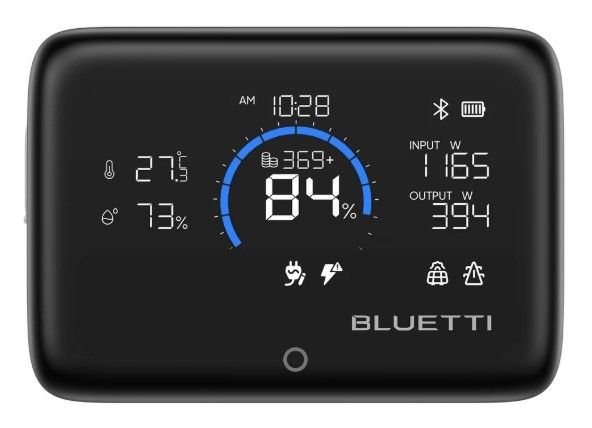
I didn’t get the remote BLUETTI Magnetic Screen Display; I use the Bluetooth app on my phone instead. If the remote display could also control the power station, that would be enough for me to buy it. It looks pretty cool, but I don’t need it. BLUETTI Magnetic Screen Display. Most advertisements have the power station sitting on a kitchen cabinet… I would never use it this way.
Not included
The BLUETTI Elite 100 Mini does not have a built-in wireless phone charger, unlike some previous BLUETTI power stations. You can charge your phone much faster using the USB-C adapter. I was glad I didn’t have to pay for a feature I wouldn’t use.
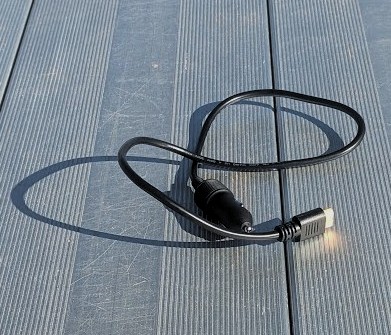
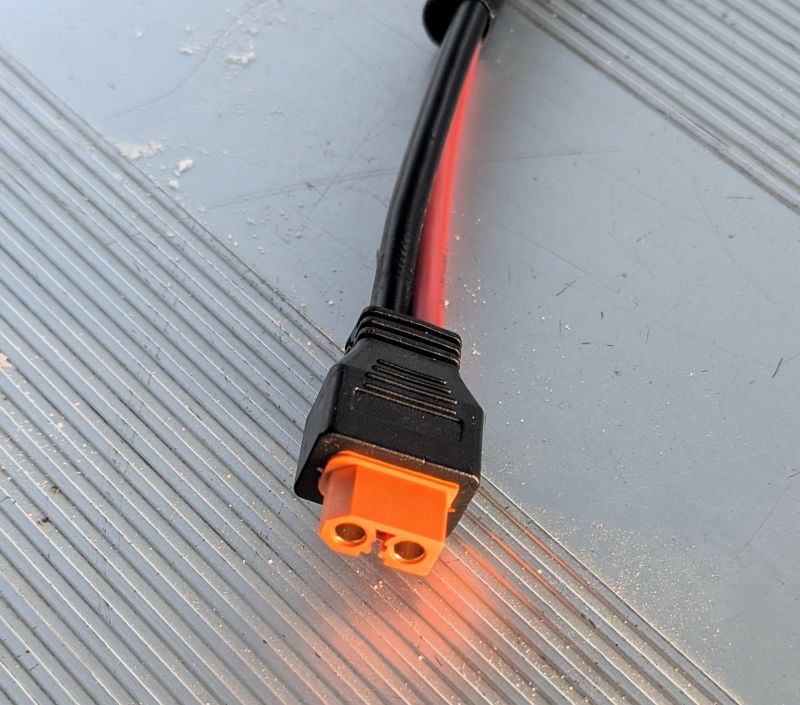
I was somewhat surprised that a DC charging cable for solar wasn’t included, and that the only DC charging cable included had an old-fashioned cigarette lighter-style plug. I didn’t get the portable solar panel option for the power station because I already have lots of panels. A DC solar charging cable is included with a BLUETTI solar panel.
Caution:
This should be obvious: NEVER connect the included charging cigarette lighter-style cable to the DC output port with the XT60 adapter plugged into the PV port. Even though the XT60 adapter on the DC charging cable matches, don’t plug it into the PV port. At best, you’d waste your battery by trying to charge it.
What solar panel should you use?
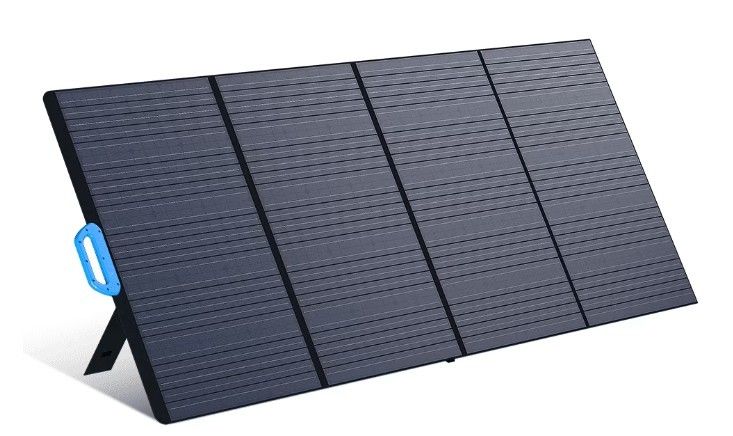
The best match for the 350-watt solar controller is the BLUETTI 350-watt portable solar panel. Other panels will work, but if they are less than 350 watts, you’ll charge more slowly than you’d like. As long as you know what you are doing and your solar panel’s open-circuit voltage is less than 50 volts, you can use a larger solar panel and still charge up to the 350-watt limit. The solar controller is limited to a 60-volt input, but as temperatures drop, the voltage will rise, and you never want to exceed the controller’s 60-volt limit.
Please subscribe and join us on our journey
We will add you to our email list and send you updates once a week. Here is a link. Subscribe
About our links
As you know, our blog income is zero – this allows us to be independent and just tell the truth. We don’t earn income or commissions. No, we don’t make paid endorsements. We don’t make recommendations; instead, we tell you what we like (or dislike). We provide links only as a quick reference to help our readers.
Links
BLUETTI Magnetic Screen Display
About Comments
We love seeing your comments, but they are not automatic. I get about 20 spam comments every day, so I don’t allow automatic comments. I read and personally publish every comment to protect the blog and keep it on topic and real. This means you won’t see your comment right after you hit submit. Sorry for the delay in publishing your comments. We love hearing from you.
Great Review. Can you charge and discharge the power station at the same time?
Yes, but to make sure, I will test it. With alternating-current charging, it shouldn’t be an issue. PV charging is slow unless you hit it with high voltage.